







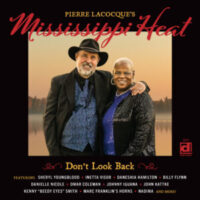


Her hit song, “Angel”· Sharon Lewis & Texas Fire from The Real Deal ℗ 2011 Delmark Records
SHARRON LEWIS singing “ANGEL” from Chicago Maribor, Slovenija 21. Dec.2016
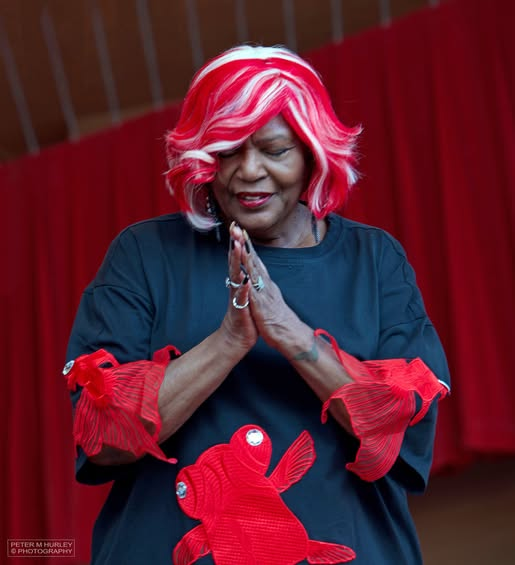
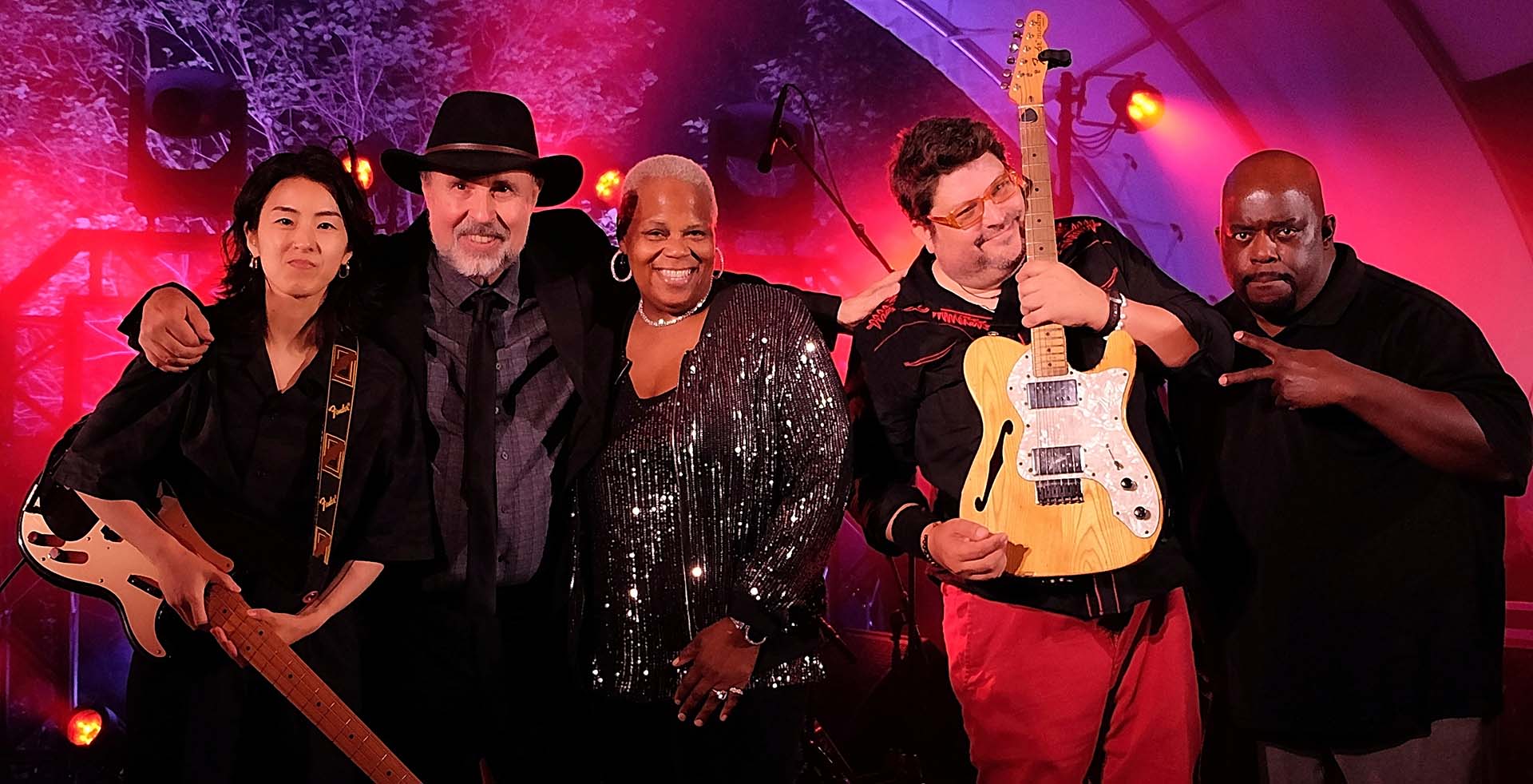
SHARON LEWIS (1952-2025) joined the 70th Anniversary of Delmark Records All-Star Band on the Pritzker Stage @ Chicago Blues Festival, 2023. Photo by Peter Hurley. pmh1951.wixsite.com/blueportraits
| Sharon Lewis, Whose Spirit and Voice Moved Audiences Worldwide, Dies at 73 The blues community is mourning the loss of acclaimed vocalist Sharon Lewis, whose powerful voice and magnetic stage presence inspired audiences around the world. Ms. Lewis passed away peacefully on Friday November 28, following a long battle with cancer. She was 73 years old. Born in Fort Worth, Texas, and long associated with the Chicago blues scene, Sharon Lewis was celebrated for her soulful delivery, deep emotional depth, and unwavering dedication to the musical traditions that shaped her career. As the frontwoman of Sharon Lewis & Texas Fire, she earned widespread respect for her electrifying performances and authentic storytelling. Throughout her decades-long career, Lewis graced renowned stages, recorded multiple albums, and collaborated with many of the genre’s most influential musicians. Her artistry, resilience, and generosity made her a cherished figure within the blues world. Sharon was more than a remarkable singer she was a force of nature. Even in her toughest moments, her spirit burned bright. Her legacy will continue to inspire musicians and fans for generations. Details regarding memorial services and public tributes will be announced in the coming days. The family requests privacy as they navigate this difficult time. |
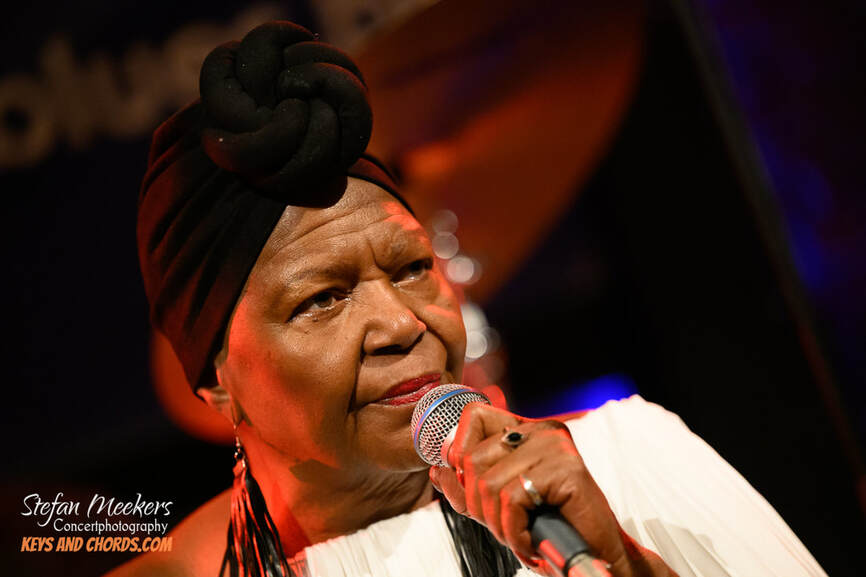
29/11/2025 Photo credit: Stefan Meekers – 20 feb 2025 @Move2Blues Belgium
Born in Fort Worth, Texas, Sharon’s earliest musical experience was as a member of a gospel choir. She moved to Chicago permanently in 1975 and became active on the Chicago blues scene in the early ’90s, and in 2005 Sharon formed her own band – Texas Fire. The Real Deal features new Sharon Lewis original songs and a few covers of songs she often performs in her live shows like Van Morrison’s “Crazy Love” and Bill Withers’ “Ain’t No Sunshine.” The overall tone of this disc is as celebratory as Sharon Lewis’ shows. She’s not about to let negativity compromise her attitude, her thoughts, or her soul. It’s no more evident than when she discusses the controversies that have arisen over who (if anyone) should inherit the crown worn by the late Queen of the Blues, Koko Taylor. “I’m not ‘Queen’ of anything,” she avows. “I’m The Real Deal.”
Sharon Lewis made her Delmark debut in 2007 as a special guest vocalist with Dave Specter on Live in Chicago (Delmark 794, DVD 1794). “…it’s Sharon Lewis who provides the disc’s most exciting moments. Her powerful pipes inject a strong gospel vibe into her originals ‘In Too Deep’ and the head-turning ballad ‘Angel’.” –Blues Music Magazine

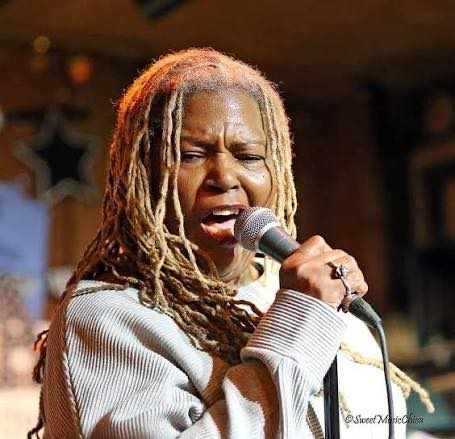
Memories of Sharon Lewis from her best friend, Janice Monti
The passing of my dearest friend, Sharon Lewis, has unleashed a flood of memories. Please indulge me as I take this trip down memory lane.
I remember first meeting Sharon about 25 years ago, chatting at the end of the bar at Rosa’s. As I drank my coffee, she decided that she liked me because I wasn’t “one of those drunk blues broads” she always met hanging out at the clubs. And with that, a friendship was born.
I remember her introducing me to the craziness of her life as a working musician: I saw first hand how “well” the promoters treated talent, when her “dressing room” at a Michigan festival turned out to be an open stall at the back of a barn, as I tried to shield her from passersby while she changed into one of her elegant stage outfits among the feed bins and straw. She hosted with me the most unforgettable, unconventional, Blues-infused baby shower for Ilaria Lantieri and Sugar Blue. When she and her band, Texas Fire, had the Sunday night residency at Kingston Mines, I often stayed through the third set, and then joined her for a predawn breakfast at the Hollywood Grill or the White Palace (and somehow showed up after, fresh as a daisy, to teach my 8.30 AM class).
So many other memories—she introduced me to the bass player one night at the old Legends, and neither one of us thought he’d still be around 18 years later. She and her band provided the entertainment at my son’s wedding. And she played an important role in helping me organize the Blues symposia at Dominican University.
Those of you familiar with Sharon’s history know that she was a survivor but never thought of herself as a victim. She overcame so many obstacles in her life, but had the uncanny knack of always being able to reinvent and renew herself, spreading her talent and joy. She could be bold, outspoken, and outrageous at times, and some found her frankness, fierceness, and feistiness off-putting. But she was always true to herself, authentic, and honest.
And to me, she was a true friend, in the best and worst of times. We shared a few tears over the years, but even more laughter.
I will never forget her.
Her words, from her signature song, Angel: “And now I know I can truly be free.”
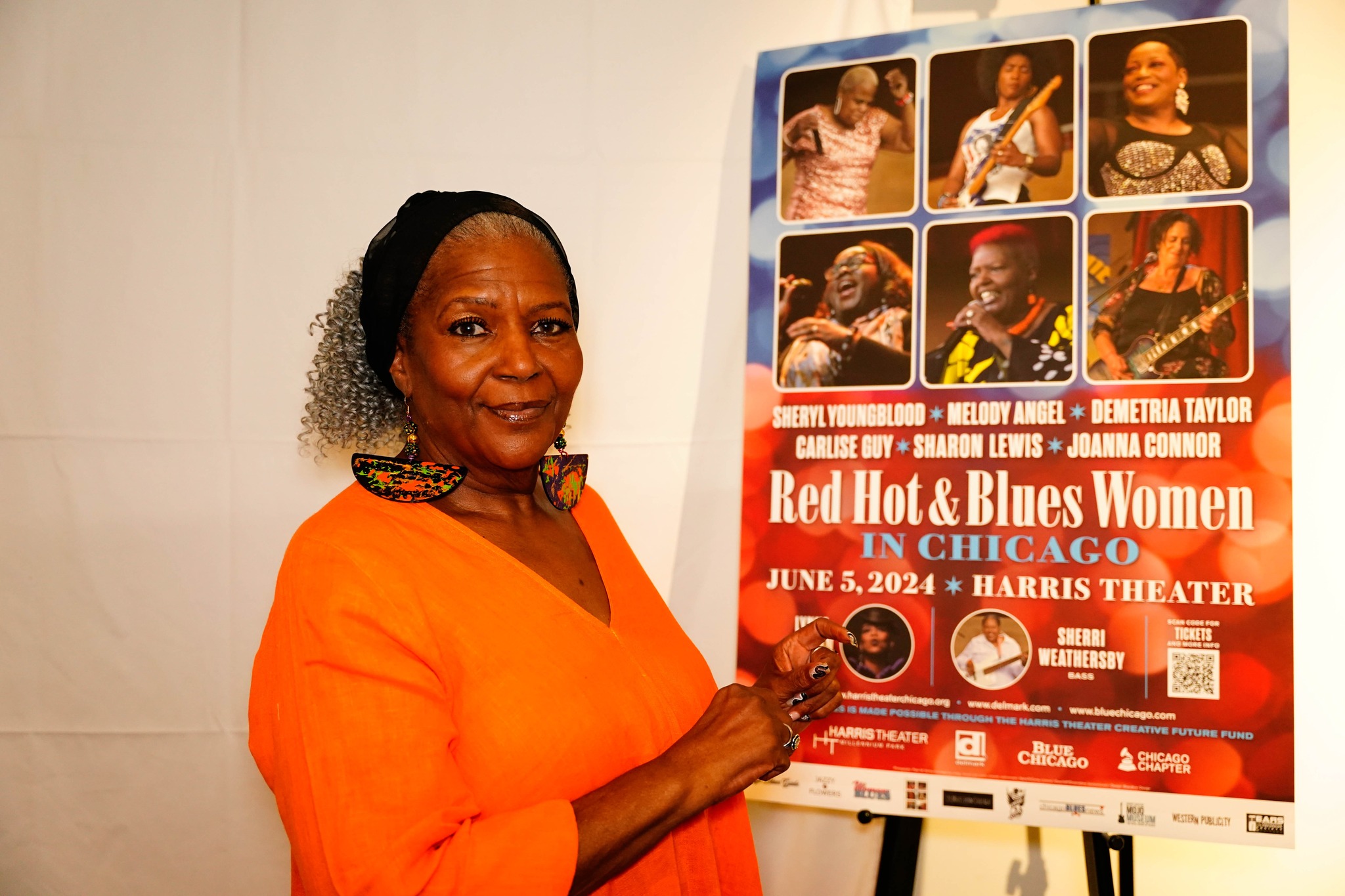
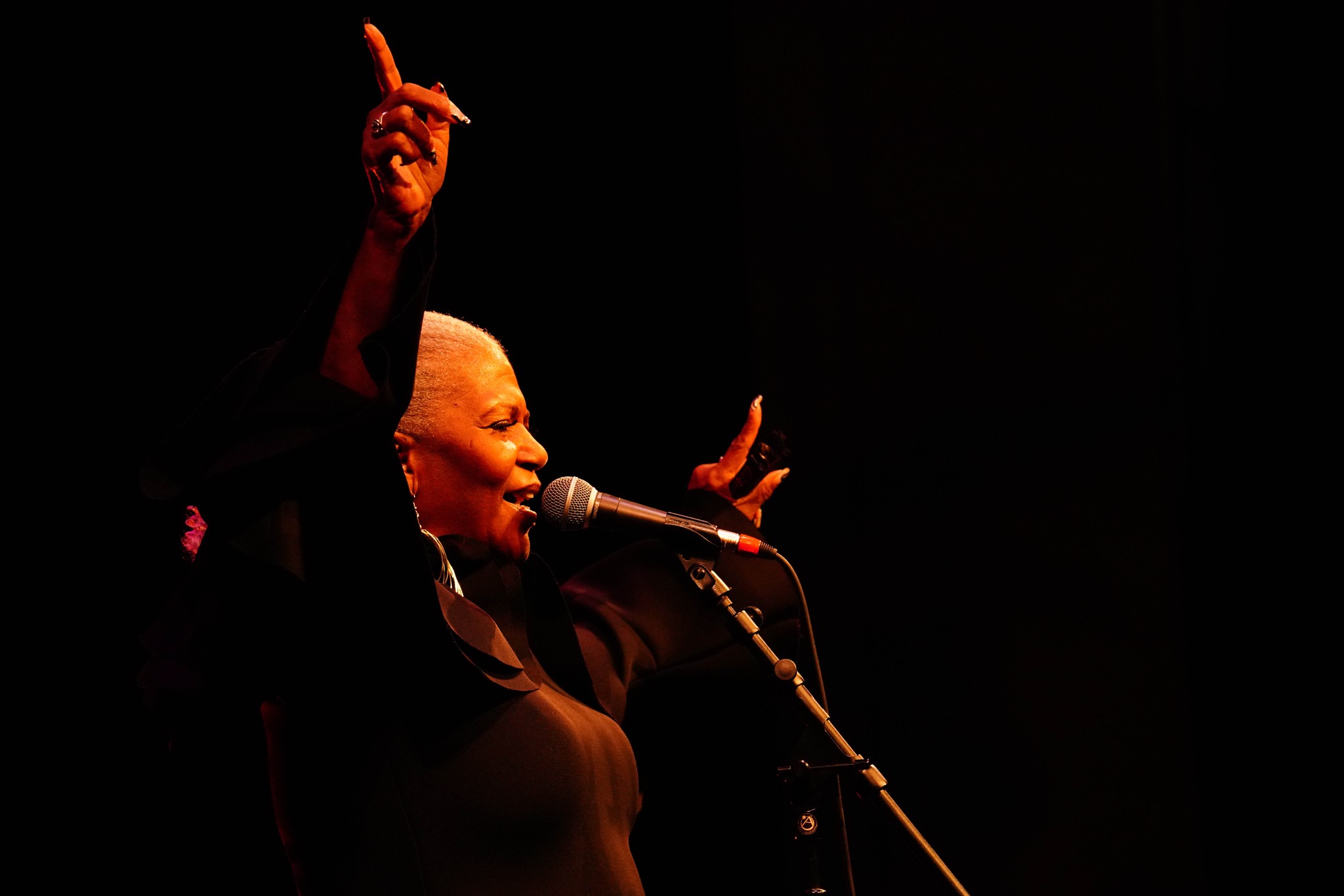
SHARON LEWIS during her historic performance at Delmark’s RED HOT WOMEN IN BLUES, Harris Theater, Chicago, June 5th, 2024. Sharon left this world last Friday. The Delmark family will miss her.

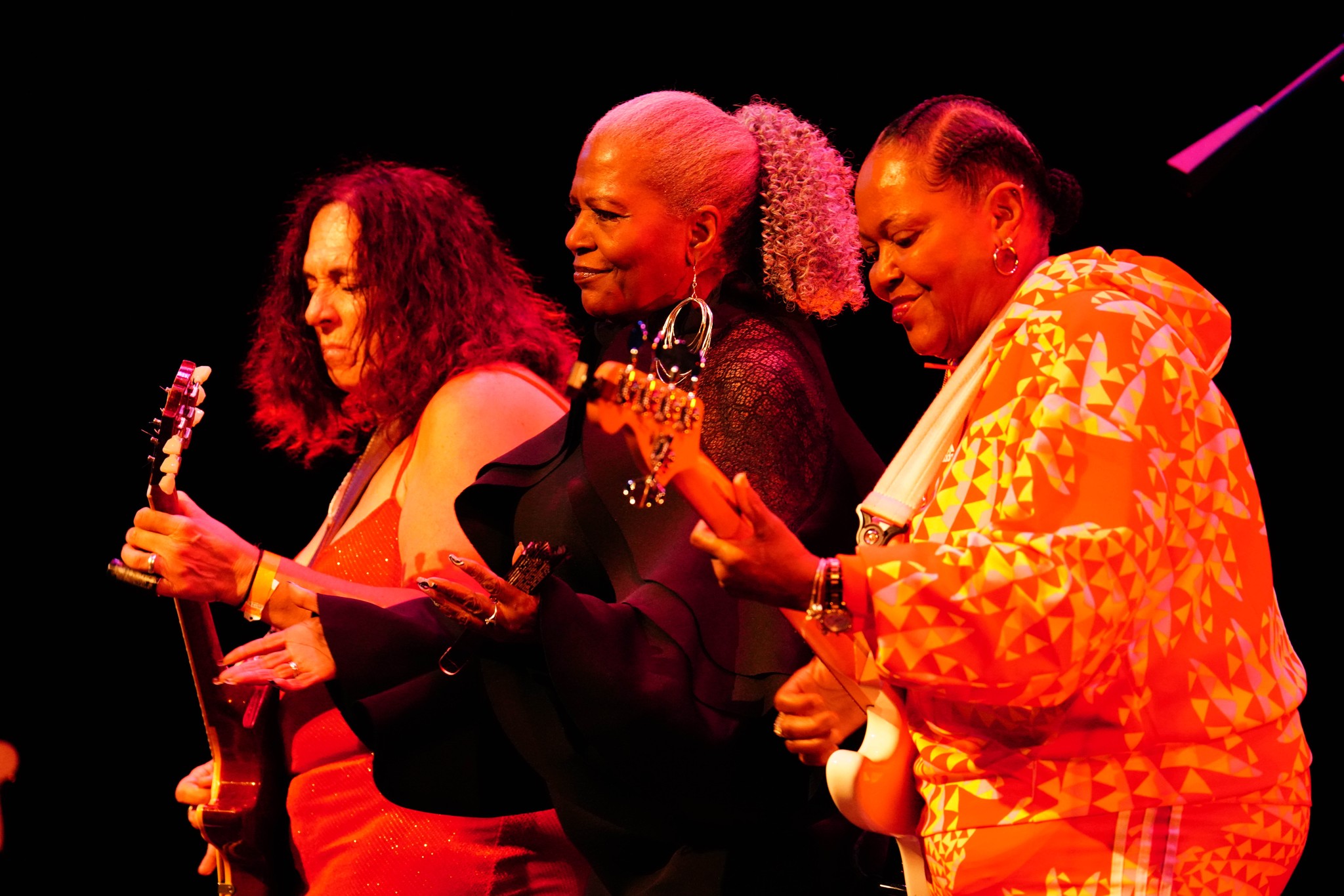
Guitarist Joanna Connor, Sharon Lewis and bassist Sherri Weathersby at Delmark’s RED HOT WOMEN IN BLUES, Harris Theater, Chicago, June 5th, 2024.
Dave Specter & Sharon Lewis: In Too Deep
Live at Rosa’s Lounge, Chicago, IL With Brother John Kattke, Harlan Terson and Marty Binder
Dave Specter & Sharon Lewis: Every Goodbye Ain’t Gone
Live at Rosa’s Lounge Chicago IL. 2007. Dave & Sharon performing a Son Seals tune. With Brother John Kattke, Harlan Terson and Marty Binder.
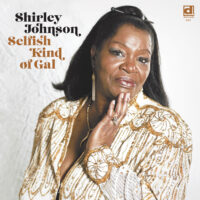
Sharon Lewis & Texas Fire – The Real Deal
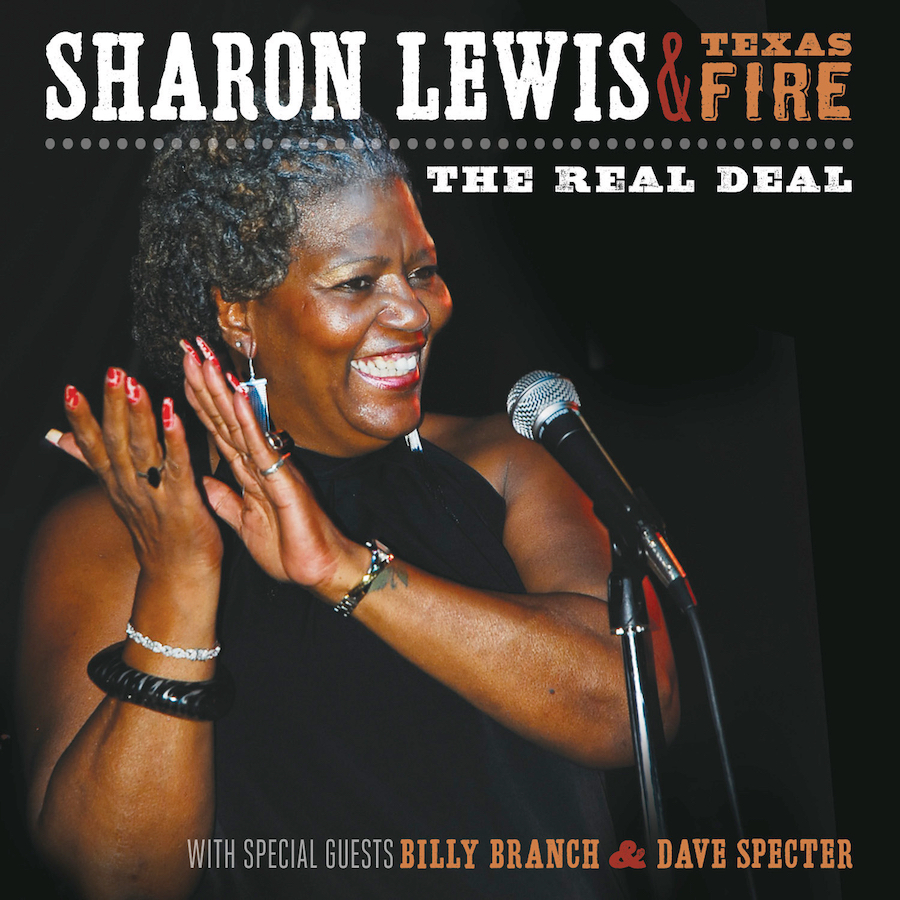
Sharon Lewis & Texas Fire – The Real Deal
Delmark DE 816 (2011)
Sharon Lewis made her Delmark debut in 2007 as a special guest vocalist with Dave Specter on Live in Chicago (Delmark 794, DVD 1794). “…it’s Sharon Lewis who provides the disc’s most exciting moments. Her powerful pipes inject a strong gospel vibe into her originals ‘In Too Deep’ and the head-turning ballad ‘Angel’.” –Blues Revue
Born in Fort Worth, Texas, Sharon’s earliest musical experience was as a member of a gospel choir. She moved to Chicago permanently in 1975 and became active on the Chicago blues scene in the early ’90s, and in 2005 Sharon formed her own band – Texas Fire. The Real Deal features new Sharon Lewis original songs and a few covers of songs she often performs in her live shows like Van Morrison’s “Crazy Love” and Bill Withers’ “Ain’t No Sunshine.” The overall tone of this disc is as celebratory as Sharon Lewis’ shows. She’s not about to let negativity compromise her attitude, her thoughts, or her soul. It’s no more evident than when she discusses the controversies that have arisen over who (if anyone) should inherit the crown worn by the late Queen of the Blues, Koko Taylor. “I’m not ‘Queen’ of anything,” she avows. “I’m The Real Deal.” Complete notes by David Whiteis enclosed.
Sharon Lewis & Texas Fire – Grown Ass Woman

Delmark DE 849 (2016)
Sharon Lewis unleashes another extraordinary Delmark album; Grown Ass Woman features 12 new original songs with special guest appearances by Sugar Blue and Joanna Connor. In a review of her first Delmark album Rosalind Cummings-Yeates wrote, “The Real Deal (Delmark 816) qualifies as one of the best blues albums of the year” — Illinois Entertainer, December 2011. The new album kicks off with “Can’t Do It Like We Do” a tribute to the current Chicago Blues sound and scene. “Hell Yeah!” is a total party jam, there’s plenty of soul like “They’re Lying” and “Call Home”, and “Freedom” is a timely song which points out that “freedom cannot be freedom until freedom means freedom for everyone!”
Sharon Lewis – Crazy Love – Digital SIngle

Sharon Lewis – Crazy Love – Delmark Digital Single 873
She’s one of the finest vocalists on Chicago’s scene, today. ‘Basically, I wanted the message to be about dealing with life – coping, surviving.’ Her songs are dealing with the basics of everyday life. The blend of soul, blues, and R&B delivers the perfect soundtrack for her lyrics. Excellent.
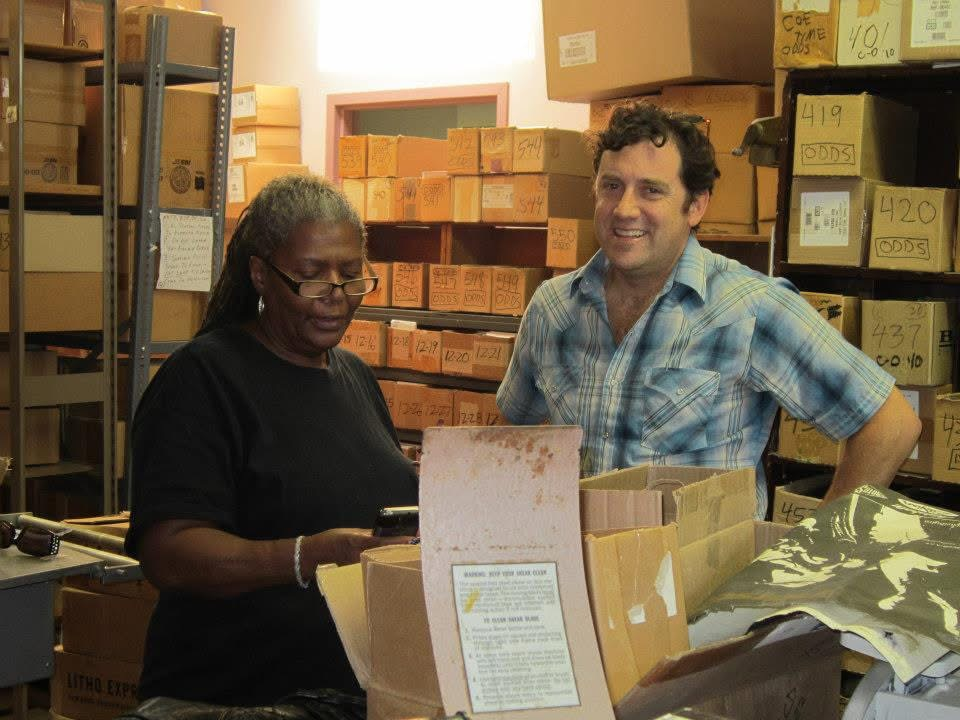
Sharon Lewis and ME at Delmark’s warehouse, photo by Frank J Corpus.
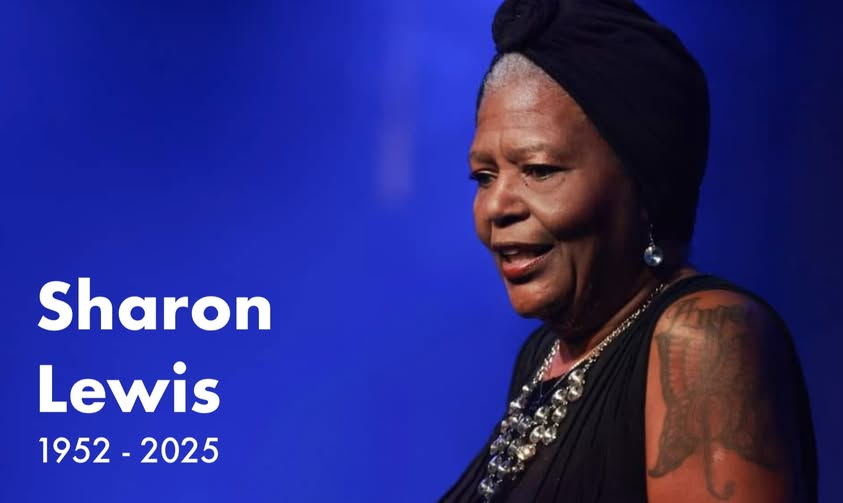
From blues/soul/jazz journalist David Whiteis
“It’s all blues if it comes from the heart.”
Sharon Lewis has lived enough, and survived enough, to know that labels and categorizations usually have little to do with real life, let alone real music. Nurtured as a young girl in a loving but strict religious household, in which the sole purpose of music was to praise the Lord and the sole purpose of life was to serve Him, she discovered the thrill of secular music (“Ahhh! Music could be joyful without going to hell! R&B! Motown! Sam & Dave! ‘Hold On! I’m Comin’!’ Oh my god!”) after moving to Oklahoma from her native Ft. Worth, Texas when she was about nine years old.
As Sharon grew up, her musical horizons continued to expand –she met Ike and Tina Turner when she was sixteen, and they invited her to join their Revue as a dancer, an invitation she turned down– but she also began to encounter some of the “stumbling blocks” that her God-fearing grandmother, Sister Maude Anna Bennett, would no doubt have counseled her to turn into “stepping stones” with the help of the Lord. Over the next few years she got married, divorced, and then fled an abusive relationship, moving from Oklahoma to Chicago, back to Oklahoma, to California, and to Chicago again in the process. During all this time, she scarcely gave the blues a thought. “The perception I had of the blues,” she says, was, “You know, ‘knock my woman down, gon’ drag her back home by her hair,’ that kinda thing.” But then one evening, she went to a club on the South Side of Chicago called Lee’s Unleaded Blues, and saw vocalist Patricia Scott perform.
“Oh, she turned my head around,” Sharon remembers. “She took every idea that I had formed about blues, and she removed ‘em. Here’s this woman up there –and a very handsome woman, I might add, who seemed to have her **** together– talkin’ ‘bout what she’s gonna do! ‘Shot my man five times, they left him for dead / I stood over his head, raised my dress / and the man raised his head!’ I’m tellin’ you! I said, ‘Sho’ ‘nuff!’”
It wasn’t long after that that Sharon gave her first musical performance at a picnic (she sang Ike and Tina’s “Proud Mary,” which she called her “magnum opus” and which remains a highlight of her shows), and over the next few years she began to establish herself around Chicago as an up-and-coming vocalist, fronting an eclectic, blues-rooted band called Under The Gun. By this time she had no problem with the word “blues,” but she was adamant that she’d define them –and sing them – on her own terms. Sharon’s church background, her youthful love for R&B and Motown, and her eventual introduction, courtesy of Pat Scott, to modern soul-blues all combined to give her a determinedly eclectic view of the music she had begun to embrace as her own.
She’s no less adamant today – which brings us to the title song, and the overriding theme, of this CD. “Blues purists get on my nerves,” she attests. “Thinkin’ that if it ain’t a one-four-five [chord pattern], lump-de-lump, lump-de-lump, that’s not blues.”
“When I say they ain’t been where I’ve been,” she continues, “they ain’t lived in my skin, they don’t know how I feel – they don’t. For somebody to just look at me and say I’m not a ‘real’ blues singer – you’ve lost your mind. You ain’t been where I’ve been. You ain’t lived in my skin. Y’know? And even if you read about me, you still don’t know how I feel.”
Where Sharon has “been” might fill volumes, but she shares quite a bit of it on this CD. Her song “Angel” limns some of the more harrowing depths, as well as some the more inspiring victories, she’s experienced; conversely, the ironic bite of the topical “What’s Really Going On?” brings a sardonic bluesiness to her take on the day-to-day challenges of negotiating social and economic uncertainties, alongside personal and emotional travails. “The message in my songs,” she says, “is about life. I think a lot of blues songs are about struggle and overcoming, struggle and survival. You’ve got to understand that this is a struggle; just living is a struggle. But even more importantly, the struggle comes when you decide to overcome. I remember my pastor saying, ‘You have to go through to get through.’ It’s a hard thing. Basically, I wanted the message to be about dealing with life – coping, surviving. And I think that in order to survive, you have to be real.”
She chooses her cover material in a similar spirit. Van Morrison’s “Crazy Love” and the old Ben E. King hit “Don’t Play That Song” (which Aretha revived in 1970) unflinchingly stare down the emotional fires of both love and its betrayal; “Please Mr. Jailer,” which Wynona Carr originally recorded in 1956, has an even more urgent story to tell. In the U.S. today, there are more young African-American men behind bars than there are in college; Sharon, who has two sons, knows all too well the sorrows that this crisis has brought about.
“If you hear the song,” she points out, “You think it was written last week or last month or last year, but the song was written [over] fifty years ago. And it still applies. It’s still going on. I’m reading this book now, called The New Jim Crow [by Michelle Alexander], and it’s just saying what I’ve been saying for a long time. First of all, we’re losing voting power. They can’t get loans to further their education, some places won’t let them live there. You can’t get a decent job, you can’t have a decent place to live. We need to keep this in front of us. Because it’s still going on; it hasn’t stopped. It’s just legalized Jim Crow, and this song talks about that.”
But the blues, as Sharon makes clear, is about celebration and survival, not merely bemoaning or wallowing in misfortune. The overall tone of this disk is as celebratory as Sharon’s shows – and, for that matter, as uplifting as the gospel music on which she was raised, and which she still holds dear to her heart. “I’ve lived through some treacherous times,” another of her lyrics tells us, and after prevailing over those times and that treachery, she’s not about to let negativity compromise her attitude, her thoughts, or her soul.
It’s no more evident than when she discusses the controversies that have arisen in Chicago lately over who (if anyone) should inherit the crown worn by the late Queen of the Blues, Koko Taylor. Various claimants have been suggested; a few have even suggested themselves. It’s led to hard feelings in certain quarters. Sharon, though, refuses to besmirch Koko’s legacy, or her own inner peace, by being drawn into the fight. She remains determined to stay focused on what’s truly important –in music and in life– and not be distracted or corrupted by side issues.
“I’m not ‘Queen’ of anything,” she avows. “I’m the real deal.”
– David Whiteis, August, 2011. Liner notes from Sharon Lewis’ THE REAL DEAL
“The Blues is a reflection of today.”
When Sharon Lewis sings the Blues, she invokes roots that extend back for generations, but the spirit she summons and the subject matter she takes on are as immediate as this morning’s headlines. “I really think the Blues is a reflection of what’s going on in this country,” she affirms, “on this day, in 2016, or whenever it is. It is exactly what is going on today.”
Sharon’s longtime admirers won’t be surprised at her professed commitment to relevance. Her last Delmark outing, 2011’s The Real Deal, was a jubilant party set, tailor-made for dancing and celebration, but it also included such topical fare as the sardonic socio-political commentary “What’s Really Going On?,” a remake of Wynona Carr’s “Please Mr. Jailer,” and the title song, in which Sharon threw down a gauntlet to purists who’d try to constrain the innovations of African-American Blues artists with arbitrary notions of “authenticity”. This time out, the good-time spirit remains just as strong (check out “Hell Yeah!,” a funk-driven, N’Awlins-tinged party anthem goosed by trumpeter Kenny Anderson’s intricate, quick-step horn arrangements overlaid by Sharon’s juke-joint preacher vocals), but she also reaffirms her determination to combine the timeless celebratory spirit of the Blues with the equally venerable tradition of commenting on the social conditions and challenges faced by people in the community from which the Blues arose – where the music is still nurtured, and where it continues to evolve.
You need go no further than this CD’s title song to understand what this means to Sharon. “I originally had this theme,” she says, “because I had this idea of celebrating Black women, with Blues. I wanted to celebrate Black women, because I think we have such a different feel and take on life, especially with our children and the things that we go through. And that’s what it started out with; that’s why I wanted ‘Grown **** Woman’ to be the anchor.”
And indeed, the song is both a proclamation of womanly strength and a defiant refusal to accept anything less than full, due respect – a kind of bluesier take on the theme Beyonce addressed in “Formation,” her now-famous celebration of sass, class, and empowerment. “Chicago Woman,” meanwhile, brings it all back home – when Sharon boasts of a life-toughened Windy City woman who “won’t be denied,” it’s clear she’s singing about herself and all of her sisters. Meanwhile another Chicago woman, guitarist Joanna Connor, amplifies Sharon’s theme with slide patterns that slither, buzz, and scream with both grace and knife-edged, thrusting power.
True to Sharon’s insistence that the blues are “a reflection of today,” other songs on this disk confront some of the darker dangers and struggles faced by the women whom Sharon is celebrating. “Freedom,” penned by guitarist Steve Bramer with a verisimilitude that sounds as if he were channeling Sharon’s own spirit when he wrote it, finds a Black mother having “the conversation,” as all Black Americans know it, with her young son as he asks her how he can stay safe in a society rent with racism and social inequality.
It’s when discussing this song that Sharon asserts, most adamantly, the ongoing relevance of the blues to modern-day American life, especially Black life. “Things have gotten worse,” she maintains. “It never stopped – especially for Black women. I mean, [to] tell my kids, ‘Don’t let ‘em make a statistic out of you.’ And then, ‘Be careful out there,’ and ‘Watch out for the police; do whatever they say. And you still might get hurt.’ I never thought, after all that marching and chanting and stomping up and down back in the sixties, and here we are, doing the same stuff for the same reasons. That’s the killing part about it; it never stopped.”
Through it all, the Blues remains for Sharon the time-honored vehicle for proclaiming and communicating these truths – both lamenting the sorrows wrought by injustice and celebrating the strength to overcome them. This is one of the reasons she included B.B. King’s anthem “Why I Sing the Blues” in this set along with her own “Can’t Do It Like We Do,” which celebrates the Blues as Black expression – both the music and the style in which it’s performed (“They can’t dance like Mike [Wheeler] and Larry [Williams] / they can’t rear back like Ms. Nellie [Travis]”) – and insists that honoring and acknowledging this cultural legacy is essential to truly understanding the music. “It was born from my ancestors,” she affirms. “It stems from the ancestors. This is what they used to comfort themselves and to tell stories. The blues tells stories about life. This was part of our oral history. The blues is about struggle – about surviving and overcoming.”
This is also, in other words, music that celebrates the human spirit and the human condition in all its flawed beauty; it’s music that confronts life head-on and then dares to sing – and dance – in its face. In that spirit, the country-tinged, gospel-infused ballad “They’re Lying” finds Sharon’s protagonist revealing her most tender and vulnerable side; but even here, as the singer bemoans being raked over the coals by gossip, she doesn’t play the victim, vowing instead to “stand up and put my foot down” rather than wallow in self-pity. It’s a secular updating of the old gospel theme of being “‘buked and scorned” but remaining steadfast in faith. “Walk With Me” reveals a similar meld of openness and resolve, as Sharon’s love-seeking protagonist both entreats and challenges – “Walk with me baby, if you’re going my way”– making it clear that she will both demand and give deep satisfaction. The other side of desire, of course, is heartbreak, and on songs like “Home Free Blues” and “High Road,” Sharon summons a voice both life-scarred and resolute as she proclaims the determination to carry on, with head held high and eyes focused firmly on the future, in the face of romantic disappointment and betrayal.
Meanwhile, though, the party is still going on, and it shows no signs of waning. Sharon’s “Old Man’s Baby” is a rollicking take on a vintage Blues theme, its rootsy origins amplified by the echoes of classics like Muddy Waters’s “Got My Mojo Workin’” and Earl Hooker’s countrified “Galloping Horses, A Lazy Mule” cantering through the background; the stripped-down funk of Bramer’s “Don’t Try to Judge Me” creates the perfect landscape for Sharon’s vocals – equal parts good-time abandon and steely-eyed resolve – as she delivers an uncompromising yet jubilant challenge to nay-sayers and haters.
It all serves to show, yet again, how the power of the Blues – as exemplified in Sharon’s churchy reading of Bramer’s “Call Home,” an inspirational anthem that melds worldly and spiritual relief in the great deep-soul tradition, and “Soul Shine,” Warren Haynes’ magisterial ode to grace and spiritual healing – both redeems and transcends. “This is our heritage,” she testifies again, “and we’re privileged to share it. Everyone is welcome to come to the table, partake, and contribute.”
Or, as Sharon’s own telephone message reminds everyone who gets in touch with her: “As always – long live the Blues.”
David Whiteis, Liner notes from Sharon Lewis’ GROWN ASS WOMAN, 2016
David Whiteis is the author of Chicago Blues: Portraits and Stories, which includes full biographical portraits of Sharon Lewis and other current and former Chicago blues artists, and Southern Soul-Blues, both published by University of Illinois Press.