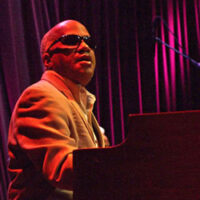
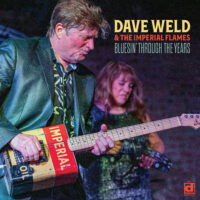


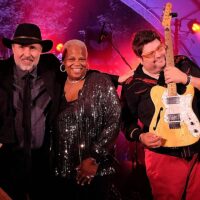
Keyboardist extraordinaire Roosevelt Purifoy recently had a fantastic gig at LE PIANO in Rogers Park and Delmark was there to support and Delmark is excited to announce that Roosevelt will be releasing a new Delmark single in 2026!! Roosevelt has added his amazing piano and organ and keyboard talent to countless Delmark recordings. This is super special and well-deserved milestone in his illustrious career to have his own Delmark recording as a leader!!!
“Keyboardist, composer, writer and producer, Roosevelt “Hatter” Purifoy Jr. has performed for decades with a who’s who of artists: Buddy Guy, Marvin Gaye, Son Seals, Jimmy Johnson, Willie Clayton; and he appears on dozens and dozens of recordings, likely into the hundreds. He has been the go-to pianist for indie blues and jazz label Delmark Records for years. His talent for adapting his style to best support other artists has led to sessions with Lurrie Bell, Syl Johnson, Sugar Blue, Larry McCray, Eddie Burns, Mavis Staples, the Kinsey Report and many others.”
https://www.instagram.com/roosevelt.purifoy
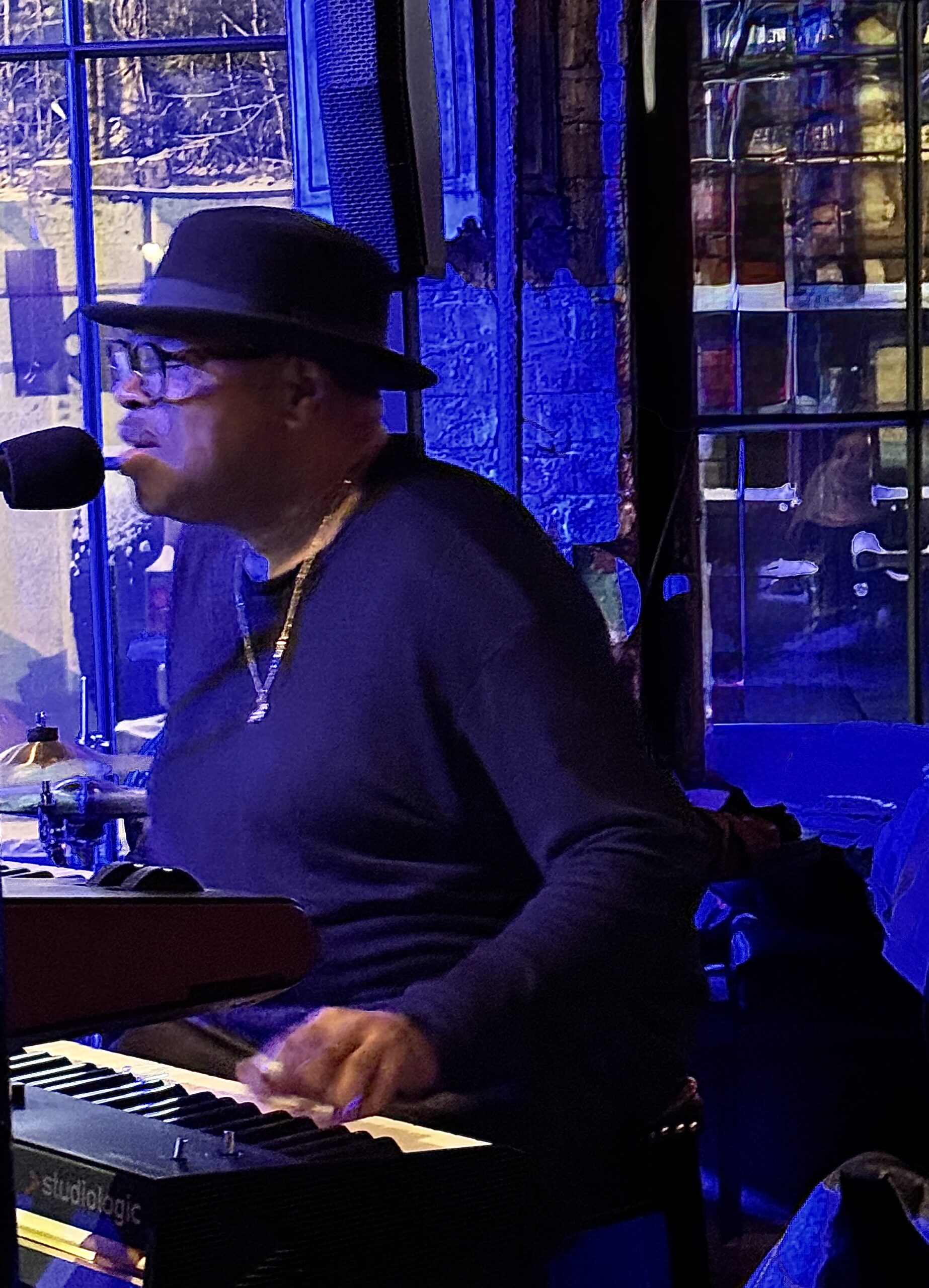
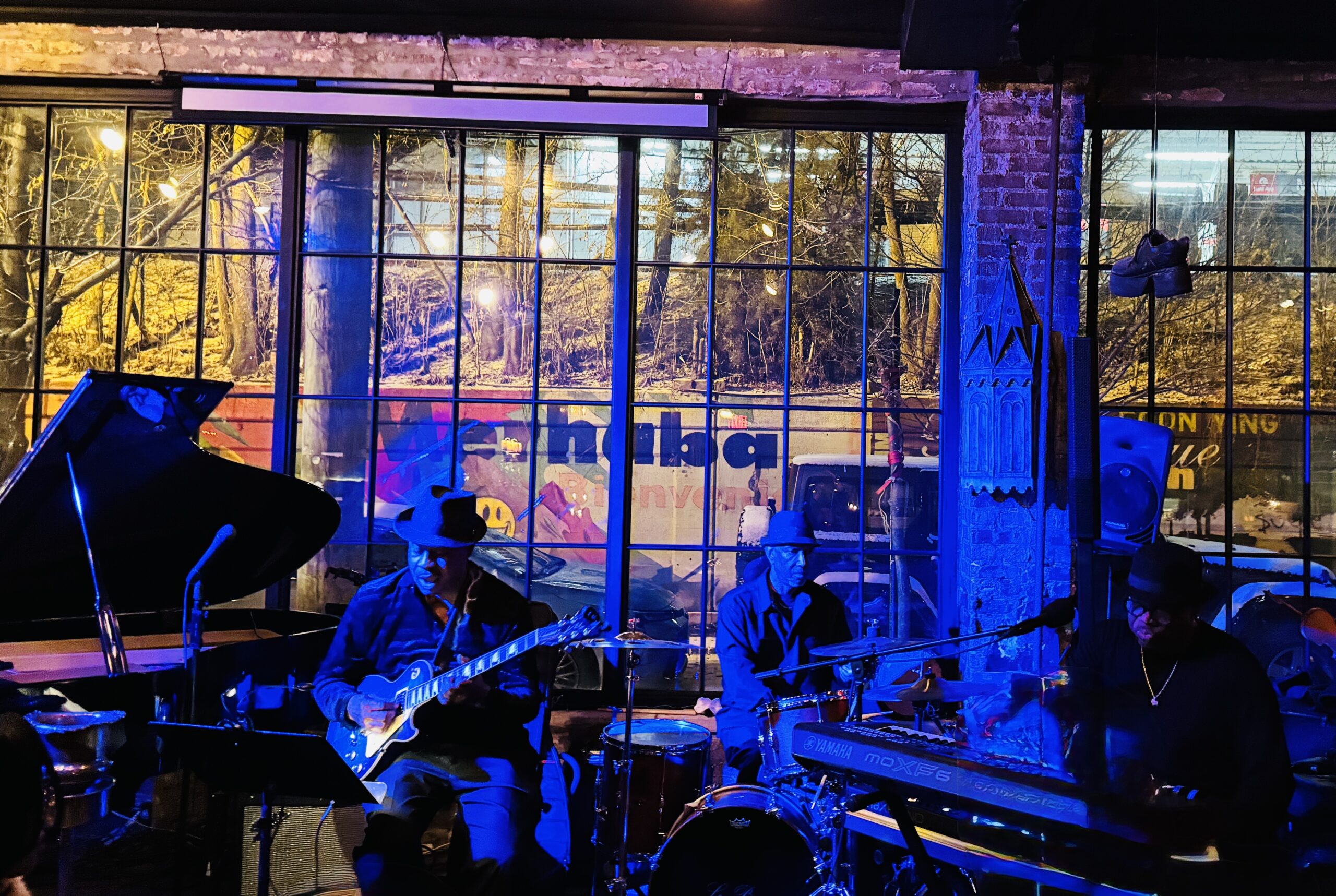
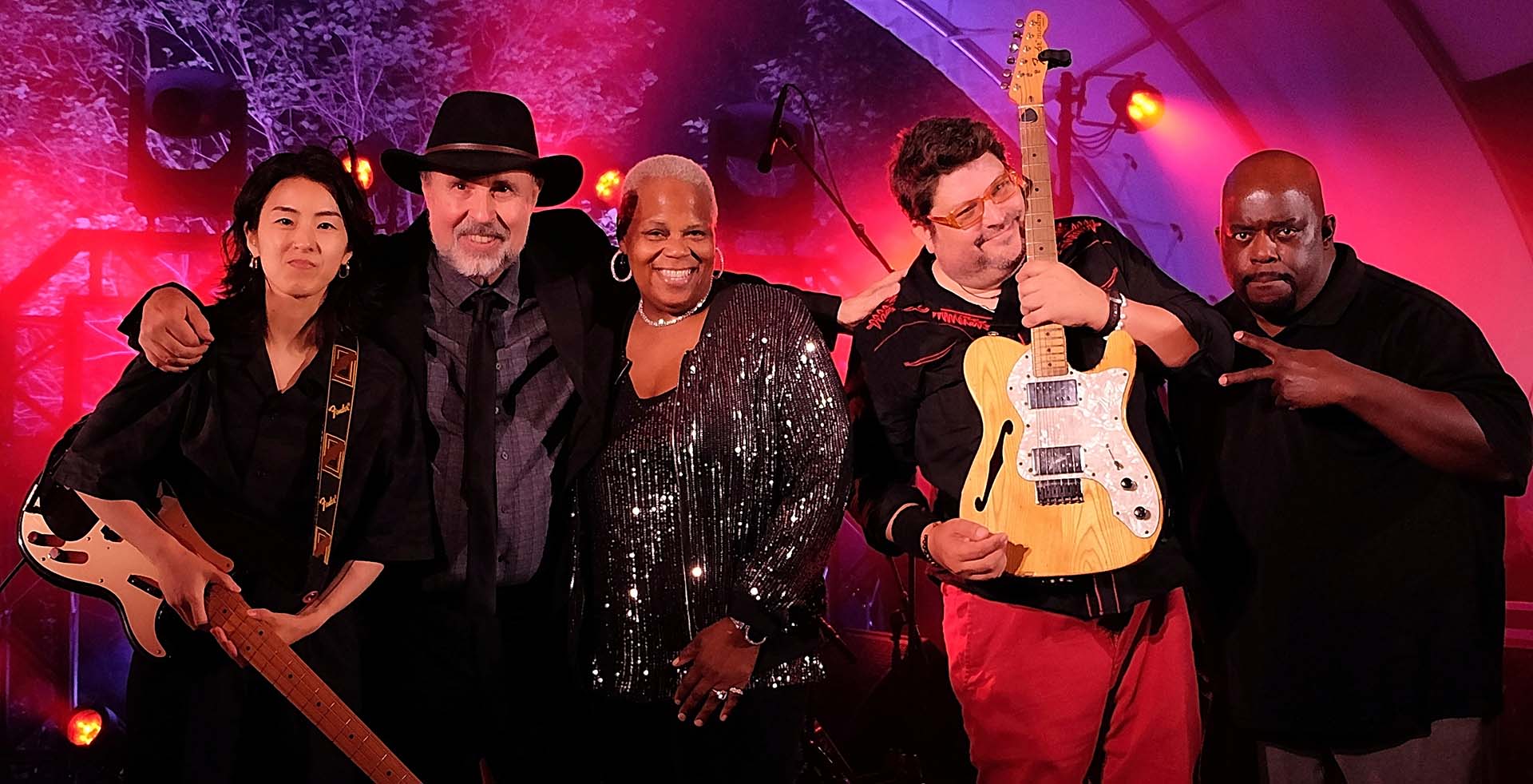
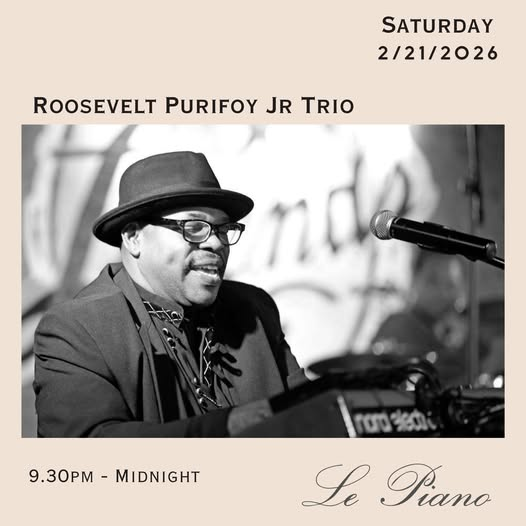
Roosevelt Purifoy Trio at Le Piano: Dave Jordan on guitar, C.G. on drums, and “Hatter” Purifoy on keys!!
Exciting Jazz & Blues Events plus Shows you won’t want to miss! WINTER JAZZ FAIR 2026! A day of jazz filled with engaging concerts, panel discussions, and vendors. Come visit us at the Delmark Table! 📚We will have Books, LPs, CDs and apparel! 💿Friday, February 20, 2026 Chicago Cultural Center 78 E. Washington Street Chicago, IL  Don’t miss The Dave Specter Band featuring John Kattke at The Venue in Aurora! Always happy to return to Aurora’s premier music venue who Delmark has partnered with for many events. Dave and the band will performing from his new, highly acclaimed LP, Live At SPACE Volume 1.We hope to see you there!Be sure to pick up one of Dave’s new albums at his show or you can get it here:Live At SPACE Volume 1 Listen to “Ponchatoula Way” from Live At SPACE Volume 1 here! Come see the Roosevelt Purifoy Trio at Le Piano Saturday, February 21st at 9:30pm! You’ve likely seen Roosevelt as a sideman and studio musician for all the great Chicago blues bands, but hear is your chance to see him do his own thing. He will be accompanied by C.G. on drums & Mr. Dave Jordan on Guitar. Come out and join us 😊🎶🎶Le Piano 6970 N. Glenwood Chicago, IL 60626   If you are lucky enough to be in Spain right now, be sure to catch the Sheryl Youngblood Band at a show or two!! You can download her digital single here:Red Hot Women In Blues Or purchase the latest Pierre Lacocque’s Mississippi Heat cd featuring Sheryl Youngblood here:Don’t Look Back |
Here’s a great article on ROOSEVELT PURIFOY in LIVING BLUES magazine from 2018
Roosevelt Purifoy Jr
by Scott M. Bock
Though he is not well known, even to many blues fans, Roosevelt
“Hatter” Purifoy Jr. has performed for decades with a who’s who of
artists: Buddy Guy, Marvin Gaye, Son Seals, Jimmy Johnson, Willie
Clayton; and he appears on dozens and dozens of recordings, likely
into the hundreds. He has been the go-to pianist for indy blues and
jazz label Delmark Records for years. His talent for adapting his style
to best support other artists has led to sessions with Lurrie Bell, Syl
Johnson, Sugar Blue, Larry McCray, Eddie Burns, Mavis Staples, the
Kinsey Report and many others.
A native of Chicago, Purifoy has worked full time as a musician since
he was a young man. Mostly, he has been honored to make others
sound their best. For much of his career, however, his opportunities
were limited due to his refusal to board an airplane. He decided to fly
a few years ago, and as a result, audiences across the country are
discovering his talent. He is also stepping out front more often with his
own keyboard-driven shows. Purifoy has now taken to the sky
regularly as Lurrie Bell’s keyboardist, and he is finally working on a full-length recording of his own.
At a show, you’ll catch him sitting on stage at the piano, running his
fingers with ease over the keyboard—slowly overtaking the voices in
an overfull club. Soon, most people in the room are listening even
though the performance has yet to begin. It is immediately clear that
he is a master at his instrument.
When Purifoy is the front man, or when he is given the space to
stretch out, he is a man transformed. The room becomes a rocking
church and then an urban juke house. It happens gracefully, but
without much warning.
Musician and showman, Purifoy commands any piano or his beloved
Hammond B-3. At church or during Mardi Gras, playing 12-bar blues
or freestyle jazz—his fingers alternately float over the keys or use
them as a percussion instrument. He ends up sitting on the stage floor
reaching up to play, then standing over the keyboard and stunning the
crowd who are now cheering him on, in awe of his talent and
showmanship.
Purifoy is a warm, enthusiastic, engaging man who pours out his story
in gallons, weaving in recollections of the many people who influenced
him and gave him the opportunity to do what he loves. As we sit and
talk on the edge of the Chicago Blues Festival, a half dozen musicians
stop by to chat. They all clap him on the back, or hug him, and they all
call him “Hatter”—a name that comes from his days working with
Carlos Johnson.
Talking about his father and mother, remembering his immensely
talented neighbor who helped him learn to play or describing his start
with bluesmen Eddie King and Johnson, Purifoy smiles frequently and
is generous in his praise for these mentors. Talking about traveling
with Bell and what comes next, he notes that the years are hurrying
by, but it is clear he still loves what he is doing, and is ready for more.
Not long after the interview, Purifoy takes center stage at the Chicago
Blues Festival as one of the keyboard masters who, one after another,
celebrate the life of Barrelhouse Chuck. Purifoy begins slowly but soon
builds to a wild, tasteful, jaw-dropping demonstration of just how
much he can do with a keyboard—stretching out and using every key
and his entire body to grab the growing crowd. On the side of the
stage, someone asks, “Who is that guy?”
“I was born February 27, 1958, in Chicago, Illinois. We lived on the Near
North Side— grew up over there until maybe age 20, 21. I started
venturing out a little bit from that particular neighborhood. I have two
sisters and one brother. We grew up in Cabrini- Green, a housing
project.
“My dad and my mom—they love music, so there was always music
going on in the house. My dad played trumpet. He stopped that to
raise his family. He purchased an acoustic piano and my oldest sister,
Marsha, she played for a little while and then she kind of lost interest
and she gave it up. So, the piano was just sitting there going, ‘Okay,
who’s next?’ [laughs] And I’m the youngest. I just sort of gravitated
towards it. My dad would sit there and play and I would watch him a
little bit—he knew a little bit. I was like six years old. I would stand by
the piano and watch him. You could barely see my head. I was that
short. It was a Kimball. I will never forget it for the rest of my life. To
me it wasn’t out of tune but it probably was. It was an amazing piano.
It was an upright piano.
“My sister was really good. She played for the church for a while. My
older brother, he took interest in music on a serious level. He played
bass guitar. That’s where I began to see, okay, this thing is serious. He
always took it very seriously. He worked hard at it. He would be sitting
at the table; his wrist would be red from running scales on the bass.
I’m like, ‘Wow.’ So, I started to take it really, really serious at that point.
I want to say I was around eight or nine years old.
“[In Cabrini-Green] we were one of the few people who would have an
acoustic piano in our apartment. [laughs] It was crazy. My friends
would come to the house and—‘This guy has a piano.’
“My mom, she always would push church. She always wanted me to
play for the church once I began to develop my skills and she saw my
talent. She was a very spiritual lady, but it wasn’t until later in my years
that I eventually began to play for the church and I played for several
churches. I was really happy with that for the obvious reason of being
able to play the Lord’s music, and then my mom was happy so that
made me happy. I enjoyed it. That’s an experience like none other. I
played for the Church of God in Christ, it’s a sanctified church, for like
eight years and their intensity level in terms of the music is really high.
“It’s like the tempos will be [claps fast], and so I would come from
playing that on Sundays and have a gig like Monday or Tuesday
[laughing] and I’m playing at the speed of light and the guys be like,
‘What’s going on? Slow down.’ It’s just that energy, that feeling and I
wouldn’t trade that for the world.
“I mentioned my brother playing the bass.
He was a great inspiration—watching him. We were fortunate enough
and blessed enough to have a gentleman who lived on the tenth floor
in Cabrini-Green who was a genius and he was jazz guitarist. His name
was George Estridge and he also taught piano. So my brother began to
study with him. So, he would come down and give my brother lessons.
My dad said, ‘Let’s get Roosevelt in here,’ and he began to teach me as
well. So, that’s where my skills really started to develop. I studied with
him maybe four years and he passed on. He had sugar diabetes. He
knew people like George Benson and people like that. He brought
George Benson by our house in the projects ’cause these guys would
hang out with him. I had no clue who they were. So then we went from
there and began to stretch out and play with different bands. I was
learning jazz, man, jazz and gospel. The gospel was already in me. It
was not something I would have to go and learn because people
would say, ‘Man, you sound like you playing for the church.’
Sometimes, when I’m playing the blues, it comes out of me naturally.
Jazz is more technical and it’s more challenging and interesting in
terms of just the greatness of it and being spontaneous and the
impulse. We started talking about Charlie Parker and Bud Powell and
Oscar Peterson and Art Tatum and all these different people, man.
That was very challenging for me, and it kept it interesting for me. But,
by Chicago being a blues town, it’s like I stumbled into the blues, which
is [laughing] sort of an accident because I never sought out to be a
blues player.
“But, I began to play with some blues artists—Mr. Carlos Johnson, the
late great Valerie Wellington, and Lefty Dizz and Son Seals and Robert
Covington and just so many people I was running into on that circuit.
And it took me a minute, it took me a while to adjust to the blues. But,
I began to open up and just receive the story of it from these great
people, Eddie Shaw, these different people. They began to amaze me. I
learned about the history of the blues. As I began to understand the
music more, I just got pulled into it. And then I began to do studio
sessions for Delmark Records in ’92.
“I had some childhood friends who were fantastic musicians. And we
would do little jamborees for the high schools and little local centers. A
friend of mine who played drums and a friend, Roosevelt Green, he
played bass guitar and Cornelius Green played drums, too, and so we
would go around and play jamborees and stuff. We were doing cover
things—stuff like Rare Earth’s Get Ready. We were loving rock, Bennie
and the Jets by Elton John, Grand Funk Railroad. And people would like
what we were doing and everything. I’ve always been a creative
musician, so whatever we would play, we would always throw our own
twist to it. And I think that made us stand out. There are so many
genres of music in my head. I have a respect for all of them.
“The very first time I got on a stage in a club was with Mr. Eddie King.
Eddie King’s sister lived in one of the projects. That’s how I met Eddie
King. He would come to visit her. My friend was a drummer and we
met Eddie King. We were young. And so, he heard us play and he said,
‘Man, I’m really looking for a keyboard player and a drummer.’ He
knew we were young and he didn’t care. He could hear that we could
play. We had huge ears. Again, I wasn’t really a blues player but I could
hear the music.
“He had Willie Black on bass and so we got with Eddie King and began
to do a couple of gigs. The very first gig we did, believe it or not, was in
Canada—Toronto. My mom didn’t want me to go. She did not want me
to go. I was 16-ish. So, he took us there.
“I never told my mom this, the very first gig, they started a fight in the
club. [claps his hands, laughing] I came home, ‘How was the gig?’ ‘It
was great.’ Man, it scared me to death. That was really my first
experience playing the blues [in a club]. Then, I went on to play with
Eddie King. That brings back so many memories.
“He schooled us. And from that I began to meet more people in the
blues field. He taught us a lot. We were young and we had no clue.
“There are a lot of jazz musicians who don’t want to play blues even
though blues is a part of it. A lot of musicians have the idea that that’s
only three chords all night. It’s sad music. I had to get around all that
and really just open myself up to the blues and I began to understand
it. I hope people can hear the respect and appreciation I have for the
music. It comes out in my playing. ’Cause I kind of stumbled into it.
Before I knew it, these years are passing by, I’m doing these sessions
and playing on different CDs and labels. It just snowballed. It just
snowballed.
“All along I’ve had an idea of how I wanted to present myself—my own
material. I’ve always had a sound or an approach to music even if I was
playing someone else’s cover tune—I’ve always had an approach to
that. So, I wanted to develop that. I wasn’t in a hurry [to step out
front].
“I never really got into singing the blues, so I would just always be the
musician. That just wasn’t something that I was thinking about. And,
again, the years were just passing by. But, I’ve always had an
appreciation for it.
“I had a few odd jobs but I been doing music. I was lucky enough and
blessed enough to be able to survive doing something that I love to
do. But, there’s a price for that. To do anything that you love to do,
there’s a price for that.
“I have a decent voice. I just never pushed myself out there like that.
“I’ve been working on an instrumental CD. When I’m writing my
material I’m singing for something I might want to do. I really love
production. I have a knack for writing songs and being able to hear
what’s going to work. A lot of CDs [I’m on] I’ve kind of had a producing
hand on it—[laughs] a ghost producer. I consider myself a creative
musician. I love seeing how far I can take this or take that. I’d like [the
CD] to do whatever it does. If I end up singing some songs, fine. If the
spirit leads me that way, I’m going.
“I didn’t fly. I didn’t do any flying until like three years ago. Imagine
that. Of course, everybody would rag on me about that. [laughs] I
never had a fear for flying. I never had an interest in doing it, which is
not good for me. I missed out on so much. If guys were on tour, the
only thing I would do was drive. If it was a driving date, I love the road.
I couldn’t go to Europe. Now, I been flying and all I do is be on a plane
it seems like now. [laughs]
“Carlos Johnson—I played with Carlos Johnson for over 20 years. I
would say I’ve been with him the longest—a long, long time. Once I
began to do the recordings, guys would call me periodically. A lot of
them knew I didn’t fly. So, a lot of stuff they didn’t call me. ‘Hatter
doesn’t fly.’ I would do local gigs with them and then we would do a lot
of recording. So many people. That was my thing. I would do local gigs.
“I’ve been playing with Jimmy Johnson for a while but I didn’t record
with him. I recorded with Jimmy Burns.
“When you’re playing blues music you must have appreciation and
respect for that music. And when you’re playing with different people,
everybody has a different style of playing. For example, Lurrie Bell—I
did two CDs with Lurrie Bell [Blues in My Soul, Can’t Shake This
Feeling] and I don’t play with Lurrie all the time. How do you play with
these different people? You have to listen to them and complement
them. And when it’s time for you to do your thing, you do your thing.
But, you have to know how to play with these different people. Those
guys realize that I know how to do that.
So I would get a lot of calls. Steve Wagner at Delmark Records, he
would call me. I never really thought of it that way. As I was doing it, I
began to realize a lot of this. So, I could play with these different
people. Carlos Johnson is on the other side of the moon from Lurrie
even though they’re both great blues players. But, with Carlos I’m
stretching. I’m more aggressive. With Lurrie, he’s got that traditional
driving blues thing—with a lot of feeling and emotion. We’re down in it
like that. Then I’ll play with Jimmy Johnson and he does his thing—or
Sugar Blue, I have to go soak my fingers after the gig. [laughs] I mean
Sugar’s so much energy and I can appreciate that. Again, my sanctified
church training [helps]. Sugar likes to move, man. And he’s very
creative and so you have to know how to play with people like that.
“I think musicians know I can hear different styles of music and know
how to insert that music for that particular style. The thing is you can
have all the knowledge in the world technically but you have to know
how to apply it.
“My love for production and composing, when you’re composing,
depending on the song, you have to know how to apply that. I use that
same concept when I’m doing live music. It depends on who I’m
playing with— it’s like what does this guy like to do? What does he
need to make him go or to push him. I would hope that they think it’s
because I make them sound better and I push them. It’s a little bit of
both.
“I’m very active on stage. I love rock music but I never really played
behind rock bands. We did a tribute to the Rolling Stones for the
House of Blues label years back. I played with Otis Clay on there. I did
some recording with Larry McCray. I’ve always had a love for rock,
particularly the ’70s. That comes out even in my playing sometimes.
“I just finished a recording. It’s called Montrose Beach. It’s a spot I love
to hang out when I chill and just kind of clear my head. It’s a very
interesting song. It’s more toward the jazzier side. We’re releasing the
single but I’m making a CD. We should have that done by August or
September. We’re walking that fine line [between jazz and blues]. I
want to dedicate [myself] to a blues CD because I can do that and I
love it.
“I really want to get the word out that, yes, I am ready to step out and
do my thing. Mentally and spiritually, I’m ready now. I believe in the
spirit—God moving me. And when he moves me to do things, that’s
when I do them. I didn’t fly but when God said it’s time to do that, I got
on a plane and I flew.
“A lot of people don’t know that I played on a lot of records. If you
Google my name, that stuff pops up. [All Music Guide lists over 70
projects.] I didn’t realize how many people I played with in the studio. I
don’t know how many recordings I played on. I never made a list.
Sometimes I would play on a project and didn’t even listen to them. I
like to keep moving. And I like to keep things fresh.
“When I’m doing a particular project, I’m focusing then. I’m not like, let
me play the project and I’ll focus later or hear what I did later. I’m
locking in. And I work within the restriction of what that project or
what the producer wants. They may want me to simple or water stuff
down. So, that’s what I do. I still stick some Roosevelt Purifoy in there,
but I give them what they want, and that’s another reason why I’m so
happy to be where I am now because I can play Roosevelt Purifoy.
“I realized at an early age I had that knack for not only playing music,
but understanding it was a part of me—so music was going all the
time. It’s always been like—music. I was a decent student in high
school. The thing about that is if you’re not in an environment where
they feed your creativity. There wasn’t a lot of music stuff going on.
That was a struggle for me. I pushed through that. Then I began to
meet the people like Eddie King and so now that kind of opened me
up. I couldn’t use my creativity back in those years. Then, I’m brought
up in Cabrini- Green so that’s a challenge within itself—so I’m going
through all these different things as a teenager. It was very, very
challenging.
“When I started to fly, and I’m getting to different places, the response
that I get from going to San Francisco; Savannah, Georgia; Maine [was
great]. I’m traveling with Lurrie Bell. We got nominated for a Grammy
for these last two CDs.
“I did a live DVD with Carey Bell. That was an experience. Oh my God,
you talk about really singing the blues, Carey Bell. I enjoy playing with
him. It’s real. It’s coming from that real place. When he strikes a note, it
just penetrates.
“I recorded with Syl Johnson, too, a couple of times. I played with so
many incredible people, man.
“A month ago or so, we went to New York. Now, I’d been to New York
before but I drove. We played in Brooklyn, this is with Lurrie. We got
this fantastic response. We went to the dressing room and they never
sat down until we came back out. To have that experience in New York
meant a lot to me because New York has so many incredible
musicians.
“I listen to blues all the time. I listen to all kinds of music from rock to
classical to country. It’s all music, man. And when you open up your
mind—music is like the blue sky—you shortchange yourself when you
don’t open up to music. Just because you don’t play it doesn’t mean
you shouldn’t develop a taste for it.
https://digital.livingblues.com/articles/roosevelt-purifoy-jr