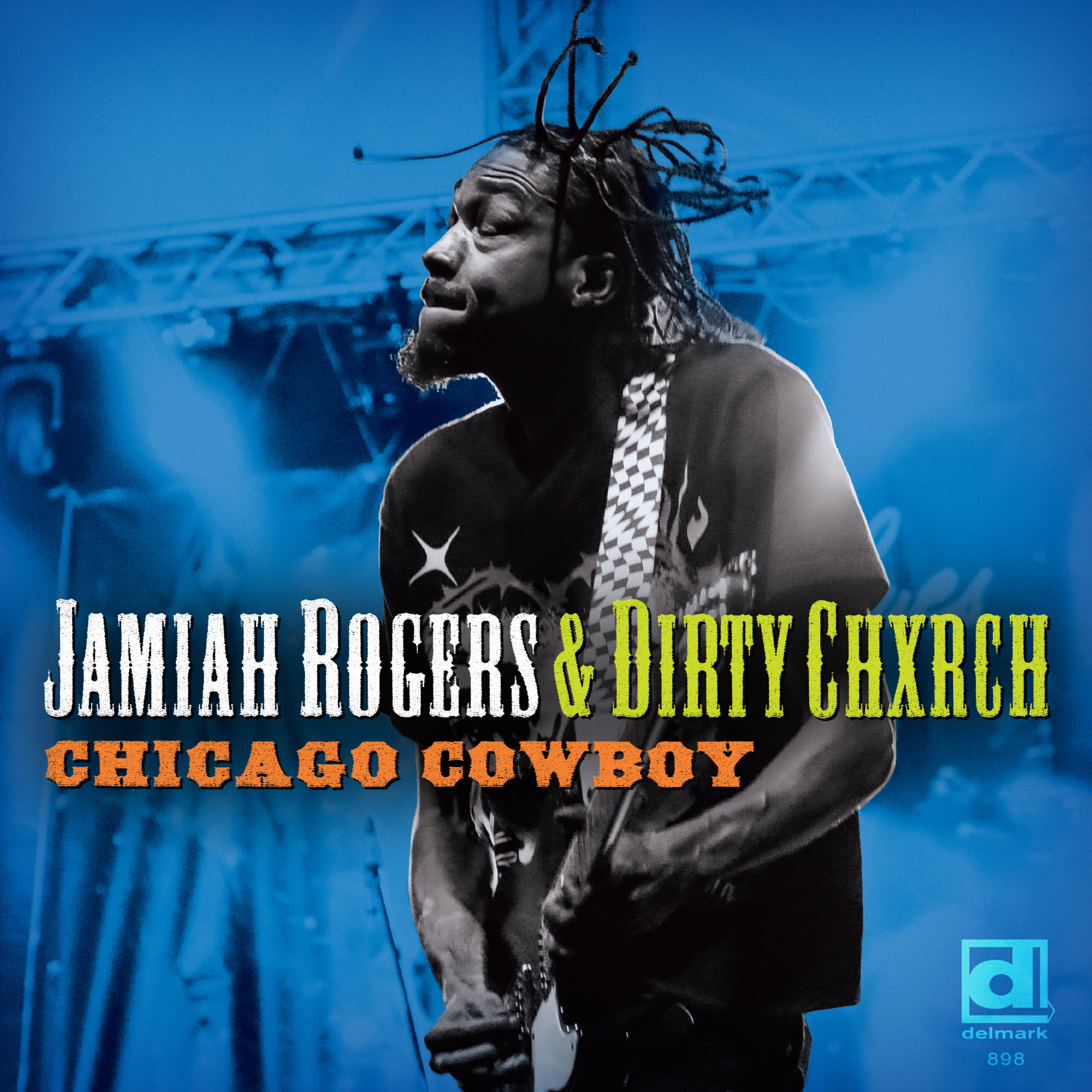


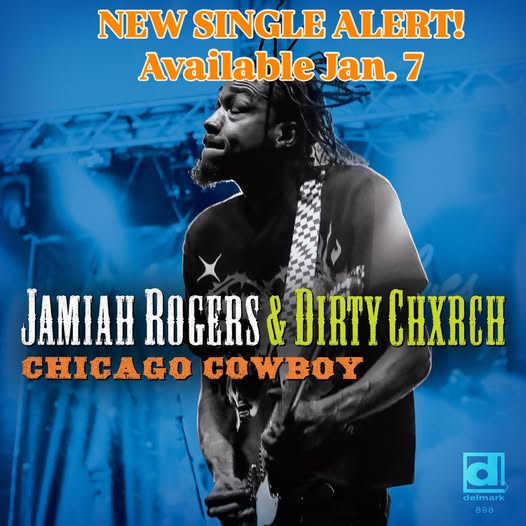
Delmark releases a brand new very exciting powerful blues rock single from rising star guitar hero, JAMIAH ROGERS!!!!
January 7th is the release date for “Chicago Cowboy”, the 1st digital single from this exciting much anticipated upcoming full Delmark album.
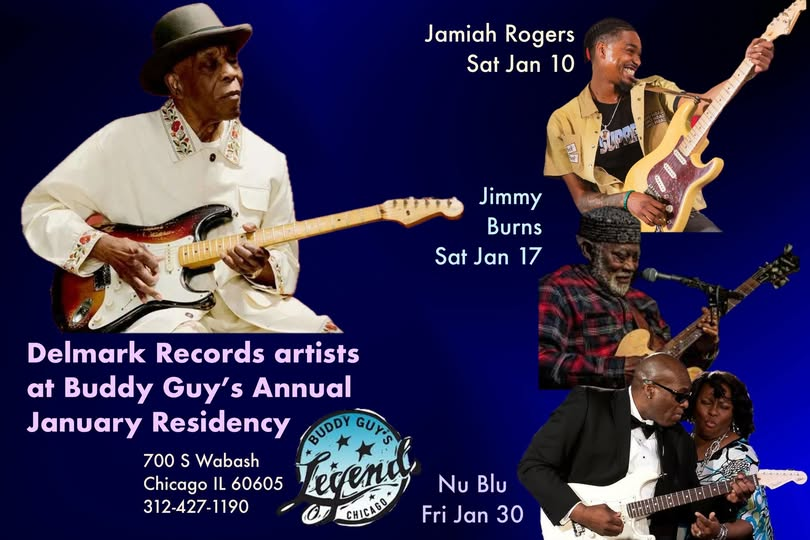
Also, Jamiah Rogers is playing Jan 10th at Buddy Guy’s Legends as a part of Buddy Guy’s January residence at his Chicago club.
Jamiah has a previous single on Delmark, “Comin’ For Mine” also available from Delmark
Jamiah Rogers & Dirty Chxrch – Chicago Cowboy
Digital Single -Chicago Cowboy
Jamiah Rogers & Dirty Chxrch
Delmark 898
“Chicago Cowboy” (4:37)
Written by Jamiah Rogers
Jamiah T.D. Rogers ASCAP
JAMIAH ROGERS vocals & guitars
ZAY HORNE bass
TYVON “TANK” RICE drums
RELEASE DATE: Jan 7, 2026
Recorded, mixed & mastered at Delmark Riverside Studio, Chicago
Executive Production & Supervision: Julia A. Miller
Associate Producer Jamiah Rogers
Recording Engineer: Julia A. Miller
Chicago Cowboy
Thunder rolling in, comin’ in from the rain yeah
Chicago wind, hear it calling my name
Memories of yesterday, keeping me on edge
These tattoos on my arm
Got me keeping my pledge
Last night sweet dreams giving me hell
Visions of friction keep me out of jail
Fire still burning from the night before
Light the wood it’s time to even the score
I’m a Chicago Cowboy, saddled up and don’t give a ****
Town to town routines pass the brown around
Singin’ ’til the sun goes down
Had a heart but she broke the last one
That’s when I start to sticking to my guns
Fighting for good days to come my way
No guarantee tomorrow’s today, yeah
Ladies vandalize got they eyes on the prize
Choosin’ real hard when they see I arrive
Don’t feel no pressure in any room I’m in
Not even with you baby all you need is just ten
Cuz I’m a Chicago cowboy, meaner than a cactus tree
Badder than the ace of spades
Smoother than a double shot from Tennessee
Had a heart but she broke the last one
That’s when I start to sticking to my guns
Fightin’ for good days to come my way
Look in my eyes, nothing left to say!
I’m A Chicago Cowboy, I only play by my rules
Live by my own law, I do whatever I wanna do!
Had a heart but she broke the last one
That’s when I start to sticking to my guns
Fightin’ for good days to come my way
No guarantee tomorrow’s the day, oh!
https://airplaydirect.com/music/JamiahRogersChicagoCowboy
Jamiah Rogers’ 1st Delmark single from 2024 – Comin’ For Mine –

DIGITAL SINGLE from 2024
Jamiah Rogers “Deacon Denzel” – Comin’ For Mine – NEW RELEASE OUT NOW!
Delmark 885-8
Digital Single
Comin’ For Mine – Jamiah Rogers “Deacon Denzel”
Release Date: August 4, 2024
“Dirty church funk” is how Jamiah Rogers describes his first release for Delmark Records. Jamiah has been fronting his own band since he was sixteen years old. His guitar playing has been described as “a sonic rocket”. This first single was recorded at Delmark Riverside studio by a real power trio: Jamiah playing all the guitars, his right-hand man Tyvon “Tank” Rice, who has a propulsive rhythmic flow on drums, and a stalwart of the Chicago Blues, the great Larry Williams, on bass. Gear up!
“Comin’ For Mine” (Jamiah T.D. Rogers, ASCAP)
JAMIAH ROGERS vocals
JAMIAH ROGERS guitars
LARRY WILLIAMS bass
TYVON “TANK” RICE drums
Recorded, mixed & mastered at Delmark Riverside Studio by Julia A. Miller with Elbio Barilari & Jamiah Rogers
Photo Janet Mami Takayama
Graphic design by Al Brandtner
Posted on by Peter Hurley
Featured Interview – Jamiah Rogers

Cover photo © 2023 Peter M. Hurley
 The embers of the bonfire that Jimi Hendrix ignited 50+ years ago have been rekindled by the Blues flames of Jamiah Rogers and an exceptional few other guitar slingers of his generation. For them, the blues is not just a feeling, it’s a siren song howling with black heat. The Blues is booster fuel, the electric six-string a sonic rocket. Their time is now and they’re going star traveling.
At the ripe old age of 28, Jamiah Rogers is no longer the brash young up-and-comer that we knew and loved in the last decade. He is now a full-fledged kick-ass performer with national recognition, Canadian connections and European gigs with Annika Chambers, John Primer and Billy Branch on his résumé. This prodigy has blossomed into a Chicago Blues Ambassador in the international spotlight and has proven himself worthy of his aspirational mantle “Blues Superman, the hero that keeps the blues alive.” With a new moniker, “The Dirty Deacon Denzel,” fronting a newly coined trio name “The Dirty Church Band,” Rogers is an ever-evolving musical phenom. Increased bookings and a new CD in-progress fill his schedule.
Timing is everything. As a young drummer imbued with the importance of “the pocket” by his musician dad Tony, Rogers has mastered it. And with mastery comes artistic choices. In the hands of Jamiah Rogers, timing is a feel to be flexed, stretched and pulled beyond limits only to be snapped back at a moment’s notice with verbal cues, a glance or shrug of the shoulder to synchronize changes with his bandmates. The Dirty Deacon Denzel takes brilliantly improvised flights of guitar-fancy through the sonic stratosphere, while his solid rhythm section keeps it sure-footed and earthbound, providing him a place to land.
“That’s the only way it makes sense; that’s the only way that life makes sense; it gots to come back on the 1,” jests Rogers.
Angular, long-limbed and sharp dressed, Rogers cuts a striking figure on stage. Some nights masked in round blue-tinted shades, other nights without, his sly eyes communicate layered meanings intrinsic in many lyrics of the blues. The Fender guitar in the man’s hands can express ancient and space-age secrets, and create soaring displays of sorcery with chunkified beat patterns, scratches, scritches, harmonic sustains and wails. To hear Jamiah Rogers live is to ride a wave of rhythmic funk and audio dynamism orchestrated by a top-o-the-line trickster front-man. Loose and tight, and with as much room to roam as outside jazz, he and his 3-man unit combine as a finely tuned engine of coordinated rhythm and muscle, sinewy in the lane and monstrous at the rim. He’ll take a blues standard, invert it, convert it, turn it upside down, skitter it sideways, go down low and turn it on a dime.
 The Dirty Church Band‘s opening number of their second set at Chicago’s venerable blues watering hole, Rosa’s Lounge on July 14 was a magnificent mash-up that illustrates his elasticity. Jamiah & company featured a 28 minute tour de force that began with an original delicate ballad “Promise Me You’ll Never Leave” from his “Blues Superman 2021” project, cascaded into a soulful treatment of Albert King’s “I’ll Play My Blues For You,” morphed into a rocking version of the Temptations “Papa Was A Rollin’ Stone,” and ended with a deconstructed Johnnie Taylor’s “Last Two Dollars” where a relentlessly repeated truncated vocal line, “Just fuh my…” became a mesmerizing mantra. The man’s got range.
We meet for a chat at chief engineer/producer Rick Barnes’ state-of-the art Rax Trax Recording studio on the far north side which, for over 30 years, has captured the sounds of blues, rock, funk, alt, jazz, classical, chorale music and jazz. Jamiah is in the throes of a new fertile period of writing and is bound and determined to capture it on record with the sonic verve he feels at this stage.
The studio atmosphere is charged with anticipation of capturing a new sound, and the presence of a camera crew helmed by well-known music videographer John “Nunu” Zomot has added a buzz. Barnes and Rogers go back to 2002 when dad Tony recorded “In The Pocket” at Rax Trax with six year old Jamiah on drums. This triple-threat started on drums at three, moved to bass, then to guitar by eight or nine when “My Pops gave me a real Fender,” Jamiah adds. These current sessions provide an opportunity for the two old collaborators to catch up with each other’s creative directions taken in the ensuing years.
“This is my first recording project since my 2021 EP Born Again Blues. I recorded all the instruments on that one. On this new one I’m laying down ten originals, eight new ones and two from the prior EP. I work well with Rick,” he continues. “He’s opened up the studio for me to take full advantage of the sounds I want to create. He’s there with me listening to the same things that I’m hearing and making contributions. It’s been real heavy.”
On this day, Jamiah will be adding some guitar on previous tracks with himself on drums and band member Aidan Epstein on bass.
“We’ve laid down a tight groove to soar on top of. My training as a drummer has held me in good stead. I’ve come to find out there are many instrumentalists, and even vocalists, who started as drummers. Legend has it that Albert King was a drummer as a young man. Prince played drums. Lenny Kravitz played drums. There’s no better training.” He suggests that he might bring in horns and keyboards to spread the sound out on a future session.
 “Since Rick and I are in experimental mode, we’ll flesh it out as the sound is built. Unlike the early days of my recording when I brought everything in already worked out, I’ve learned to use the studio as an additional instrument for building sound.”
With further probing, this musical artist reflects on a certain degree of perfectionism that drives him.
“It can be frustrating to some extent. Once it’s done and ‘put in the atmosphere’, so to speak, it can’t be changed. To me, sound is always evolving and I want to explore it to its fullest possibility. I’m learning, though, to get there when I’m there,” he states. “The thing is, I might hear a little differently when recording than some other musicians because I play so many instruments and I can imagine the direction that each could take if I was playing,” he muses.
“Not to be egotistical, but there are times when I think that having a whole bunch of Jamiah’s would be sick,” he laughs. “I love it, though. To have the freedom to do what I want to do, say what I want to say and play what I want to play.”
Speaking of recordings, the conduit through which so many of today’s musicians came to music, Rogers plugged into music as a youngster directly and more immediately through his father’s bands, musician friends and live performance rather than vinyl or CD.
“Me, being a home-grown musician, it all came from Pops. We’d play as a three-piece, Pops on guitar and whatever bass player was available, and me on drums when I was three years old. That was my first-hand, hands-on experience. Later, even before I picked up guitar, there was a place called La Rosa’s Bar & Grill in Hammond, IN where my Pops would take me on Sunday nights after a whole day of church services. We’d be wore out! But we’d see a cat there named Stan Skibby who looked, performed and played so much like Hendrix—I find out later ‘cause I didn’t know who Hendrix was at the time—that I might as well have been watching Jimi himself. I was just a kid, but that’s a lasting memory and I couldn’t wait to return there every Sunday night. That was my first star-struck moment.”
“I also came to Albert (King) through another musician there, Jimmie J and The HardDrive Band. Man, that cat had the Flying V, played lefty, had Albert’s moves, sound and everything. He used to be on the Bears and had a bum ankle so he played sitting down just like Albert. But when he felt deep into it, he’d stand up and hoot! My appreciation for that style of blues was formed there and then. Live music, it was always live music, my Pops’ generation and even older. ”
 “Of course, later, I explored the histories of other great Blues artists. I love Muddy Waters, of course, ‘cause I do “Hoochie Coochie Man,” Robert Johnson, Howlin’ Wolf, Sonny Boy Williamson, BB, Albert and Freddie King through their recording output. And I love slide guitar when I first heard what Derek Trucks could do with that. I listen to it all, man. But I’d have to say, it was through our local guitar men and others who I watched up-close-and-personal that had the biggest influence on me. Guys like Myron ‘Dr. Love’ Robinson, ‘Skibby’ and Jimmie J, ‘Biscuit’ Miller who I came up with [he’s my friend]—these were all my guys.”
Jamiah Rogers’ early bands, Next Generation Music Machine and Jamiah On Fire and the Red Machine were powerful forces when he first burst on the scene. And with Jamiah Rogers Band, he bestowed the title ’Blues Superman’ upon himself, the title of his last full CD. His current iteration Dirty Deacon Denzel and The Dirty Church Band is another step forward, a bounding leap.
“Yeah, that’s what I’ll call my new CD too: The Dirty Deacon.’”
The man is fluid, evolving, and not one to be pigeonholed. When asked who he’s been listening to, old or young, vintage or contemporary, Jamiah’s appreciation for Robert Glasper comes to the fore.
“He incorporates so many forms into his music, but it all makes sense. He’s a keyboardist and not much of a singer so he features guest vocalists. The main one I really love is Lalah Hathaway. He’s got songs that are smooth and low that I can lay back and close my eyes to, then he’s got songs where I say ’Turn-this thing-UP!’ I also like MonoNeon. His understanding of funk is just—incomparable.”
In the realm of business, Jamiah is a one-man, one-stop shop.
“I do all my bookings, I pay the band, I own my own masters. I keep it all close to home,” he insists. I’ve put myself in position to be ready to take what comes along with my success. I’ve been at this a long, long time. I might not be old, but in musical years I am a seasoned veteran. My number one thing is to spread my gift. I’m a young black kid from Chicago who really didn’t have too much but had enough; who had a gift when he was young with good parenting and basically preserving that gift that you see your child has and do with it what they can do.”
Projecting ahead, Rogers expands, “I could even see myself having my record label for artists who don’t quite know where to go. There are talented people out here who have books of songs who don’t put them out because they don’t have the platform or encouragement to do so. I’d like to be that person in the industry who could do that for them; something positive.”
At this rate, Dirty Deacon Denzel, Jamiah Rogers, is destined to be continuously morphing, an artist to keep an ear open for many, many years to come. This genuine Chicago child prodigy was born to evolve, incorporate new sounds and new forms, spread good will and excite his audience whenever he performs. He can go star-traveling as far and wide as he wants, while knowing he can always come back to earth on the 1.
Q&A with Jamiah “Deacon Denzel” Rogers – a lifelong journey to spread blues and happiness wherever he goes
“I want my music to affect people in a spiritually positive outer-body experience. I want to inspire all ages, Male and Female, to show them that anything is possible with God, hard work, discipline, and dedication.”
Jamiah Rogers:
The Baddest Young Chicago Blues Man
Jamiah was 1 of 2 born April 21, 1995, in the south suburbs of Chicago, Illinois. He had a singing mother and a multi-instrumental father whose main instrument was guitar. At age 3, Jamiah started playing drums at school, church, and his fathers band, The Tony Rogers Band. Jamiah enjoys all genres of music such as Blues, Funk, Rock, Reggae, Soul and R&B. Inspirations and heroes are Bob Marley, Jimi Hendrix, Albert King, Freddie King, B.B. King, Howlin’ Wolf and Muddy Waters. Even though drums were Jamiah’s first instrument, at age 7, Jamiah’s parents encouraged him to pick up the guitar and the occasional father/son lessons began. Jamiah also is a multi instrumentalist. Drums, guitar, bass, piano, organ, are all extensions of Jamiah’s musical genius but guitar and drums are his first loves. Jamiah recorded 2 cd’s named “Taking the stage” (2012) and “Winners Never Quit” (2015). In 2017, Jamiah recorded his first solo release “Blues Superman”. Through his career, Jamiah has made a special appearance on the Experience Hendrix (2010) concert and closed the concert out with Billy Cox, at the Chicago Theatre. In 2018, Jamiah toured Europe and France with 2019 BMA “Soul And R&B female of the year” Annika Chambers on the New Blues Generation Tour.
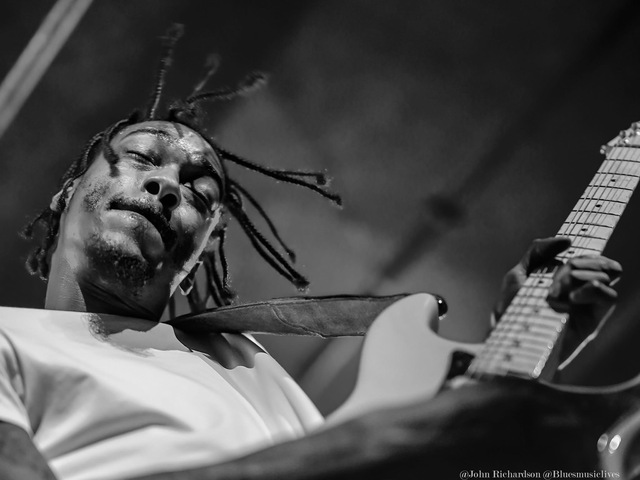
(Jamiah “Deacon Denzel” Rogers / Photo © by John Richardson)
In 2021 Jamiah released his first self-produced EP, “Born Again Blues”, which consisted of 5 original songs. Jamiah Rogers “Dirty Deacon Denzel” is on a lifelong journey to spread blues and happiness wherever he goes, be a witness to his musical genius and greatness! Jamiah Denzel Rogers latest album “Dirty Church Row” (2025) is a live recording. The 6-tracks were recorded in 2022 at the California Clipper in Chicago. Jamiah “Dirty Deacon Denzel” Rogers (Guitar, Vocals); Brandon “Redd” Tolliver (Drums); and Aidan Epstein (Bass) were on fire on these recordings. Delmark’s upcoming album “Blues Superman” (2026) is on a life long journey to spread blues and happiness wherever he goes, be a witness to his musical genius and greatness!
Interview by Michael Limnios Special Thanks: Jamiah Rogers & Aidan Epstein
What do you learn about yourself from the blues and what does the blues mean to you?
I’ve learned my history, heritage, and originality through the blues. My love for the blues is the biggest piece of me. I have a passion and a love for other genres, but I live the Blues. I think if everybody had an understanding of what Blues is, they would know they live it as well.
How do you describe your sound and songbook? What’s the balance in music between technique and soul?
Describing my ever-evolving sound/songbook and the balance is as best to my Band named “Dirty Church”. We are all church musicians, personally born and raised, who play every Sunday, so we all are all experienced in the Gospel field. We all played in school. After that we played sand learned with older generations of musicians in the industry, personally with my pops. So, to say my sound is influenced by my environment and certain sounds that were introduced to me that I attached myself to. Between technique and soul, I love to keep the formats of songs true, but I dedicate my originality to anything I play as well as my band members.
How has the music influenced your views of the world and the journeys you’ve taken?
Music allows more of a raw perspective of what is actually going in the world. Music has more directly allowed me to travel and encounter different energies that tend to prejudge based of age, skin, and background but wherever I share my gift of music I’m considered family. That is what also influences me to stay humble and respect the ones before me, with me, and after me.
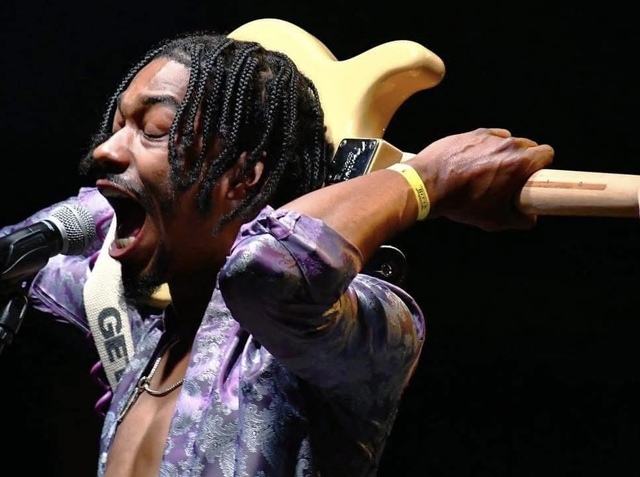
“The Chicago Blues Scene is a monumental and essential piece to Blues History, it gave Blues a Show with an Attitude! Even til this day Blues Clubs around Chicago are filled by curiosity and passion, young and old! Some times you walk in strangers turned into family Singing Sweet Home Chicago by the end of the night, or you might see a fight hearing Leave my Little Girl Alone! We have our own signature scene!” (Photo: Jamiah “Dirty Deacon Denzel” Rogers)
How do you think that you have grown as an artist since you first started making music? What has remained the same about your music-making process?
I’ve grown as an artist by recognizing a few things for sure since age 4. It’s not about just making music, it’s a lifestyle. Most times you have to be an artist when you don’t want to be! The world needs your gift! You can play music every weekend as a hobbie or you can grind with your instrument as a visionary! One main thing staying the same is Leading by the Spirit! When dealing with music (I never use a song list). Making music, I always make sure my lyrics catch ears, and my music catches feet.
Why do you think that Chicago Blues Scene continues to generate such a devoted following?
The Chicago Blues Scene is a monumental and essential piece to Blues History, it gave Blues a Show with an Attitude! Even til this day Blues Clubs around Chicago are filled by curiosity and passion, young and old! Some times you walk in strangers turned into family Singing Sweet Home Chicago by the end of the night, or you might see a fight hearing Leave my Little Girl Alone! We have our own signature scene!
Are there any specific memories or highlights of your tour in Europe that you would like to tell us about?!
Non related to music, around 2019 on my overseas tour with Annika Chambers, I got to take my late mom to Paris. On a break day, my moms, father, and I went to put a lock on the “Love Bridge”. Another specific memory was being shocked by seeing my pictures on the public promotion platforms! Music Related- completing a month long tour in Poland, Czech-Republic, and a few other places, Sacrificing our thanksgiving!
You have a new live album, titled “Dirty Church Row” recorded in 2022. You’ve worked in many different settings, from clubs, bars and juke joints to open air festivals and theatres. How do you navigate between these different worlds?
I’ve grown to be a business man. But I come from humble beginnings. The vision and the grind for open air festivals and theaters started when I was playing the clubs, bars, juke joints, birthday parties, nursing homes, restaurants, etc. At a certain part, some things just become muscle memory once you understand what you need to be you!
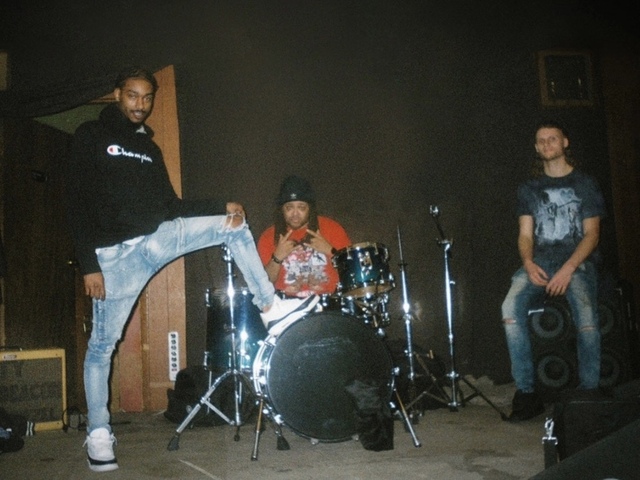
“Passion is a living thing. It has to be watered, fed, and nurtured. If any of these three things are lacking, Passion will turn into Pain, QUICKLY! Being born in music honestly gives you an undying, burning or dim, passion for music rather you want it or not. Blues shaped Black American Culture by giving it a voice, a look, an expression, and a feel that it was never used to. Blues is the “Dirty” twin to church and we don’t have to get into that conversation.” (Photo: Jamiah “Dirty Deacon Denzel” Rogers, Brandon “Redd” Tolliver and Aidan Epstein)
Why is it important to we preserve and spread the blues? What is the role of music/musician in today’s society?
Blues is history& art, spiritual & religion, Teacher & Student (Albert King & Stevie Ray Vaughan), Community & Family. It is a vital and living part of the genre. The Blues isn’t for everybody for Everybody but Everybody is for the blues! The role of Music/ of a musician in today’s society is taken for granted in my personal open. Music is too accessible and not beneficial to certain musicians because as high of demand music and musicians are, There is no real standard to certain musicians and they are the first ones to take the low paying gigs which makes it harder for experienced musicians to get what we deserve! While we attempt to survive on other resources and revenues.
Your work is known for creatively reimagining blues tradition. How do you balance respect for the roots with experimentation?
Thank you for the compliment! My experimentation comes from the inner thoughts of my mind, past, present, and the future. While those tend to flow like a faucet sometimes I have to filter in, or emphasize more of the “blues protocol” or “blues essentials” which has become a second nature from literal hands on training and experience!
What keeps a musician passionate over the years after in music? How did the blues shape Black American culture?
Passion is a living thing. It has to be watered, fed, and nurtured. If any of these three things are lacking, Passion will turn into Pain, QUICKLY! Being born in music honestly gives you an undying, burning or dim, passion for music rather you want it or not. Blues shaped Black American Culture by giving it a voice, a look, an expression, and a feel that it was never used to. Blues is the “Dirty” twin to church and we don’t have to get into that conversation.
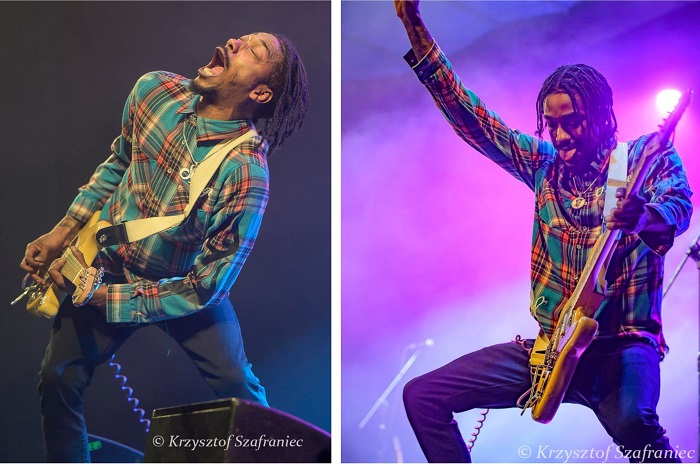
“What I see is people have a sense of the Blues but the true love for it has diminished. Also, true blues being hard to find makes it a gamble for people acceptance of the music. Unexperienced Blues enthusiast don’t know what real Blues is and the Real Blues Lovers start to start some of the sound “watered down”. I want my music to affect people in a spiritually positive outer-body experience. I want to inspire all ages, Male and Female, to show them that anything is possible with God, hard work, discipline, and dedication.” (Jamiah “Deacon Denzel” Rogers, Poland 2023 / Photo © by Krzysztof Szafraniec)
What moment changed your life the most? What´s been the highlights in your life and career so far?
Besides turning 18 and legally being able to get into the blues clubs, Losing my mother in January 2020 who was my biggest supporter, changed my life, She inspired me the most as a person and as a musician. My mindset, my image, my security, she was all of that. Her and my pops made a great team, while he was managing me. The highlight(s) of my career goes back to around 2016 on the Experienced Hendrix Tour. I was able to close out the Chicago Theater show with Billy Cox, playing Red House. Another is being able to take my mom to Amsterdam/Paris to see me perform. My highlight for my career and life is Dirty Church a 28-day overseas tour. I toured cities in Poland, Czech Republic, and Austria.
Are there any memories from gigs, jams, open acts and studio sessions which you’d like to share with us?
Actually, short story. Maybe 2012. I was invited by Buddy Guys original drummer, Tim Austin. That night I was invited by Buddy Guy on stage to play. I played my hardest until the amp blew out. Right after, Buddy Guy put his guitar on me. His tech shortened his strap on me and I picked up where I left of. That was me and Buddy’s first and last personal encounter. I still see him from time to time at his current location.
What do you miss most nowadays from the blues of the past? What are your hopes and fears for the future of?
What I miss most are what we call “The Vets” of the industry. I was learning a lot up close and personal. The “hands on” experience was fun. If I could I would go back to age 7-15 and do every Larosa’s Sunday Night Jam over again. I have no fears but my hopes for the Blues is that everyone who plays or involves themselves with it stays true to it and the people who never experienced my blues, gets the opportunity.
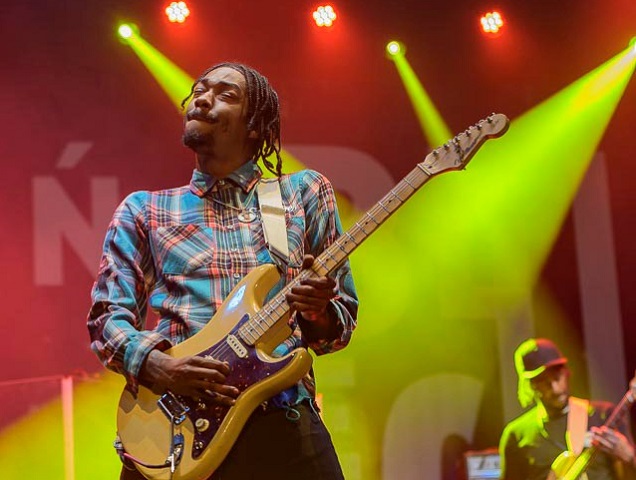
“I’ve learned my history, heritage, and originality through the blues. My love for the blues is the biggest piece of me. I have a passion and a love for other genres, but I live the Blues. I think if everybody had an understanding of what Blues is, they would know they live it as well.” (Jamiah “Deacon Denzel” Rogers, Festiwal 38 Jesień z Bluesem, Białystok Poland 2023 / Photo © by Krzysztof Szafraniec)
What are some of the most important lessons you have learned from your experience in the music paths?
One of the most important lessons I learned is, you are your best imitation. You will be surprised at what you pull out of yourself. Also, Proper Preparation Prevents Poor Performance.
Do you think there is an audience for blues music in its current state? or at least a potential for young people to become future audiences and fans?
Do I think there is an audience for blues music in its current state, Yes! Joe Bonamassa is selling out Cruise line strictly for Blues and also for sure The Blues Bender is also Being sold out. The Platforms are bearing with the fruit of audience member support, I think the focus on where and how the blues is presented may influence more younger people to become future fans.
What is the impact of Blues on the socio-cultural implications? How do you want the music to affect people?
What I see is people have a sense of the Blues but the true love for it has diminished. Also, true blues being hard to find makes it a gamble for people acceptance of the music. Unexperienced Blues enthusiast don’t know what real Blues is and the Real Blues Lovers start to start some of the sound “watered down”. I want my music to affect people in a spiritually positive outer-body experience. I want to inspire all ages, Male and Female, to show them that anything is possible with God, hard work, discipline, and dedication.
(Photo: Jamiah “Deacon Denzel” Rogers)
https://blues.gr/profiles/blogs/q-a-with-jamiah-deacon-denzel-rogers-a-lifelong-journey-to-spread

LIVING BLUES interview by Mike Stephenson
I Want to Continue Playing the Blues
Jamiah Rogers is one of the hot young blues players on the Chicago scene today. Born April 21, 1995, Rogers just turned 25 but he already has four CDs out and nearly 20 years of playing experience in church, with his father’s band, and in several bands of his own.
“My name is Jamiah Rogers and I am the lead singer and guitarist for the Jamiah Rogers Band. I’m from Chicago and I started music at the age of three, as my father, Tony Rogers, was an all-round musician. He had rehearsals for his band in the basement of our house and drums, basses, guitars, amps were all in the basement so, me being a kid, I wanted to touch all of that and find out what it did. I stayed downstairs whenever they had rehearsals and I would listen to how the music was played. I would hear a lot of blues covers such as Albert King, B.B. King, Howlin’ Wolf, Muddy Waters, and Bob Marley and all of this music I would be sucking in as a kid. My father started me off on drums and he taught me the count, one, two, three, the pocket, the basic counts of rhythm and how you play them on drums, and how to follow the lead man in the band, how to listen to the bass player, how to go about things on stage when musicians play together. I was three, four, and five when I was doing all that.
“My first gigs were playing at nursing homes and birthday parties. I used to play banquets and festivals with my father. My main focus back then was on drums and that’s when I made my first CD, In the Pocket, with my father. I was the drummer on that CD and it was under Tony and Jamiah’s name and that was about 2002. All of this was with my father who was bringing me along at that time. His band was a three-piece blues band called the Tony Rogers Band, and we played the mayor’s reception, which is something that goes on downtown, and did the Chicago Blues Festival with my father as a kid and in my beginning stages. Another big stage in my life as a musician, you know you also need outside experience, like open mic experience, so there was a place in Hammond, Indiana, called La Rosa’s Bar and Grill. Every Sunday they would have an open mic, the majority of it blues, and the house band was named Jimmy James and the Hard Drive, which was guitar, bass, drums, and piano—a four piece. The leader was Jimmy James, an absolute Albert King twin, he had the Gibson sound, the licks, the words, the phrasing, and so I would be getting all of this every Sunday. I would jam with them on drums and try and learn every blues song I could.
“I was then in a band called the Next Generation Music Machine and I started as a drummer in that band. The guitar player was named Little Chris and the bass player was named Trevor and that went on for about two strong years, and about halfway through I got serious about the guitar. We were all young guys and we were playing gigs. I also did
some one on ones in school for guitar lessons in jazz and classical music techniques. I started listening to blues guitarists like B.B. King and I got into Albert and Freddie King, and into Muddy Waters and Howlin’ Wolf, and I’m also listening to everything also, like reggae, like rock, like pop, a little country and western, and I’m taking all of this in as a musician. In the Next Generation Music Machine, I started having a couple of songs on the
side where I would pick up the guitar and play stuff like Boogie Chile or Little Wing. Jimi Hendrix was a person I was watching and who influenced me at that time. So I would play a couple of Hendrix songs and then go back to drums.
“So a lot of practicing went on and a lot of open mics went on and, as time went on, that’s when I came into my own band, Jamiah On Fire and the Red Machine, and it consisted of my two little cousins Kenyonte Dilworth on bass and Jalon Allen on drums. My father was my main influence on guitar in my younger days and my mother bought my first guitar and my father being a guitarist he was the one that gave me the one on ones in the mornings and telling me how you play this and that. I was also watching all these other
musicians so I had a lot of influences. It was my father that encouraged me to start my own band. That transition came from drums to guitar because I needed to start being the front man. I like being in the front with the mic and I’m seeing all these front men and I’m clicking with them. I took a couple of singing lessons and training my vocals. I progressed as a front man. We had a lot of rehearsals and advising Jalon and Kenyonte how and what to play and I also took them to La Rosa’s open mic. This was when I was between 12 and 14 age-wise, that was the beginning stages of Jamiah On Fire and the Red Machine. In 2008 or 2009 is when we really started traveling and going to Canada, like the Montreal jazz and blues festival, Ottawa blues festival and other dates, so I got that experience and then going on to doing the IBC in Memphis, but before that we were doing what I did as a child, doing birthday parties, banquets, and stuff like that, so I got those experiences with my two younger cousins.
“We went to the IBC in 2012 to play at the youth showcase. We had to win the youth challenge contest here first to get to Memphis, which was sponsored by the Windy City Blues Society. We then won the youth challenge again in 2015 via the Windy City Blues Society and we also won the best self-produced CD from the Windy City Blues Society for Jamiah On Fire and the Red Machine’s Winners Never Quit release and that year we also played the youth showcase at the IBC. Jamiah On Fire and the Red Machine had two CDs, the other was Takin’ the Stage from 2012.
“My two younger cousins are not with me at present and that is because of an age thing. When I was 21 I thought I needed to progress and go and do the clubs that I could do as a 21 year old, and they can’t do that being younger, so I named myself the Jamiah Rogers Band and I have my dad as a bass player. This happened after I went to Amsterdam in the Netherlands in 2016 for a blues festival. My two younger cousins are still playing music and I told them that if they are still playing when they get older I will call them if they have it together. My current band is a three piece with my father on bass and a drummer, Dionte Skinner, out of Chicago. At the moment around Chicago we play Buddy Guy’s Legends and we do B.L.U.E.S. on Halsted and we do Rosa’s Lounge, we play in Indiana. We also did the IBC in 2018 in the adult division and I made it to the semi-finals. This time I was sponsored by the River City Blues Society of Peoria, Illinois.
“The church has had a big influence on me and I was born into the church and I’m in church every Sunday. I was the drummer for the church, although I play bass now at the
New Christian Joy Full Gospel Baptist Church at 11594 South State Street, and this is my family’s church. Since I was born, I was on the drum set basically after I was three.
“I traveled to Europe late in 2018 as part of the New Generation blues package, which took me to France and Belgium. Annika Chambers was on that. I have a new album out called Blues Superman, which came out in 2017, and it was recorded at Rax Trax studios here in Chicago and it has all original material, as do all of my albums. That is in
combination with my father, like I come up with music and he comes up with the words, or I come up with the words and he comes up with the music, and we play it together.
“I love being independent but I am open to listening to record label deals. I’ve talked to a few. They want to see me play now. I want to keep my publishing but I know they’ve got the resources. I don’t want to do it too soon but I don’t want to wait too long either.
“People are very accepting of me and my young age playing the blues. You can get my music from iTunes, CD Baby, Amazon, you can hear it on YouTube. On my live shows I try
to be somewhat extrovert. I did go through the stages of just being in one spot and to myself and just playing the music. But I wanted to add showmanship and stuff as my
confidence developed as a front man. On my live shows I do a lot of my own material but we do some covers and we even do some reggae. There has been a reggae number on all my albums just to show diversity. I try to be original when I write my material and it is often based on my own experiences, and I try and make it relate to the listener. Now I’m older I can write about personal stuff. I know what pain is, I know what losing your job is about and stuff like that.
“I did a showcase at the Chicago Cultural Center for a celebration of music for 2020 with a rapper and a female percussionist. I played at Buddy Guy’s club in January. I got to open up for him. I play his signature guitar and I’ve got his signature on it too! It’s a double
Buddy.
“I want to continue playing the blues as it’s not out there or being played like it used to be, so I want to be a young artist that plays the blues. Other blues musicians like Mike Wheeler have helped me so much. He has blessed me with a guitar and another way he has helped me is that he recommended my drummer to me. I’ve had help from Buddy
Guy’s guitarist Ric Jaz and drummer Tim Austin in the past as well. I’m always working on my music and I plan to record again but my procedures for recording is that I don’t go into the studio until I’m ready. I share what I have musicwise with my father then we put a name to it and then we record it. I don’t do regular jams anymore but sometimes I go to Kingston Mines club to see Joanna Connor. I’m real cool with her and I played bass for her one time and other than that I’m just gigging. Music is starting to get a full-time thing for me. I teach music and guitar on the side. I try to listen to a variety of music such as jazz, rock, reggae, blues, rap, and stuff. For the future I’d like to record more CDs, I want to tour and travel and start a production company and a label, I want to own my own studio. I have a lot of African American friends that are into blues and they play music but don’t have any direction, but one day I would like to manage them or have management for them, and for them to have somewhere to record their music and teach them about copyrights and contracts and all that. I’ve played the Chicago Blues Festival about five times now.
“I have young musical friends like Kingfish and I’m always in contact with him and he is one of the guys I met in Memphis at the IBC for the first year I was there. I know the Peterson Brothers and I’m in contact with them all the time. I’m in contact with Jarekus Singleton also. Quinn Sullivan, Marquise Knox, we are all friends. Being able to know some of these other young artists—we share with each other. We all know where we are going. It’s just how we are going to get there. We just want to put music out and play shows and make new fans and travel.
“This COVID thing has really shut things down though. I was supposed to be on a whole month tour May 7 to June 7 and that got canceled. I was supposed to be in Germany in April too. Nobody is able to make any money now like they used to and to maintain. Hope I can get some work in the fall. I am supposed to play on the King Biscuit Festival.”
The interviews for this article took place in Chicago in June 2018 and April 2020. Many thanks go out to Jamiah’s father, Tony, and to Jim Feeney for all of their help and support
https://digital.livingblues.com/articles/jamiah-rogers